Ulysses S. Grant Quotes
So vast a sum, receiving all the protection and benefits of the government, without bearing its proportion of the burdens and expenses of the same, will not be looked upon acquiescently by those who have to pay the taxes. . . . I would suggest the taxation of all property equally.
Grant, Ulysses S. "Seventh Annual Message." A Compilation of the Messages and Papers of the Presidents, compiled by James D. Richardson, Vol. 7, Bureau of National Literature and Art, 1898, p. 334.


This law established a fundamental principle that allowed capital to be invested in new and needy territories without running the risk of the locals discriminating against businesses or establishments owned by strangers. Many states and communities still find ways to favor local businesses but not be discriminatory taxation.

Throughout most of the world, the rich and the aristocrats have been able to reduce or eliminate their tax obligations with the burden falling more heavily on the common people. Progressive taxation was thought to be a solution, but even in the United States by the 21st century many huge corporations paid little or no taxes while there was a heavy tax burden on small companies. Rich people generally paid a smaller percentage of their income than middle class people.


whether or not to buy luxuries This quotation and {639885} together illustrate why it is so difficult to classify historical politicians in the left-right categories of a future time. Here Gogel seems a strong liberal arguing for progressive taxation and luxury taxes, and tax relief for the poop, while in {639885} he sounds like a 21st century extreme conservative.


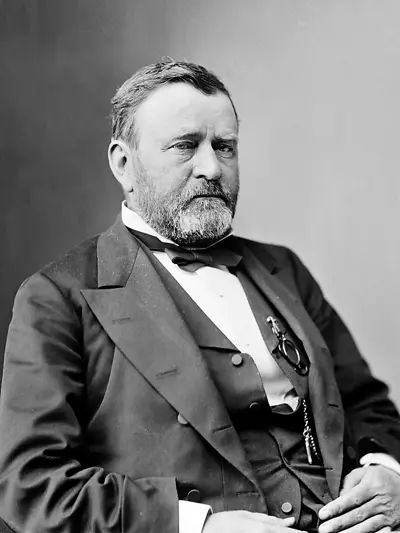
Ulysses S. Grant was an American military leader who served as the 18th president of the United States from 1869 to 1877. As president, Grant was an effective civil rights executive who created the Justice Department and worked with the Radical Republicans during Reconstruction to protect African Americans. As Commanding General, he led the Union Army to victory in the American Civil War in 1865 and thereafter briefly served as Secretary of War.
