Colson Whitehead Quotes
Slavery was a violent, brutal, immoral system, and in accurately depicting how it worked, you have to include that, obviously. Or else you are lying.
Whitehead, Colson. Interview by Terry Gross. Fresh Air, NPR, 8 Aug. 2016.


The language was removed in the negotiations that followed Jefferson's draft.


The editorial was in response to the pro-slavery speeches in the Senate of John C. Calhoun.


Southern secession and the Civil War This is one of the major quotations with which historians rebut the revisionist view that the Civil War was about States’ Rights or other economic factors.

It was then the practice of some men to engage in an attempted moral justification of slavery, including, in many cases, resorting to Biblical scripture and principles to argue that slavery was the will of God.


His voyage took him to several slave countries where his anti-slavery views were challenged by locals.


Pernambuco is a state of Brazil. His voyage took him to several slave countries.


Brown was the richest man in Rhode Island and made much of his money in the slave trade. This quotation shows that slavery was not completely a North verses South split. Northerners like Brown for whose family Brown University was named, was as virulent supporter of slavery as the most ardent Southerner.


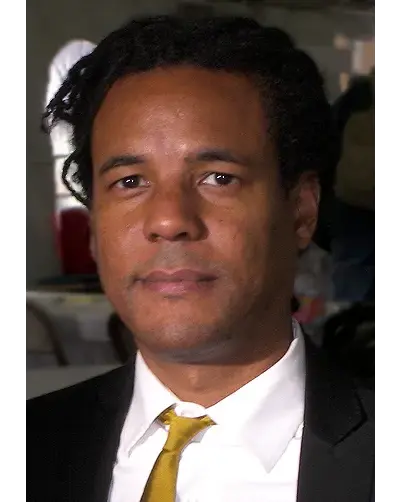
Arch Colson Chipp Whitehead is an American novelist. He is the author of seven novels, including his 1999 debut work, The Intuitionist, and The Underground Railroad (2016), for which he won the 2016 National Book Award for Fiction and the 2017 Pulitzer Prize for Fiction; he won the Pulitzer Prize for Fiction again in 2020 for The Nickel Boys. He has also published two books of non-fiction. In 2002, he received a MacArthur Fellowship ("Genius Grant").
