Royal African Company Quotes
Royal African Company
In 1672, the English trading company, the Company Of Royal Adventurers, rechartered itself changing it name to the Royal African Company to focus on the Slave Trade. By 1687 the company was given the exclusive right to trade between the Gold Coast and the British colonies in America. James, Duke of York, (later to be King James II, was interested in this company, and it agreed to supply the West Indies with three thousand slaves annually. in 1698, on account of the incessant clamor of English merchants, the trade was opened generally, and any vessel carrying the British flag was, by act of Parliament, permitted to engage in it on payment of a duty.
Royal African Company Name of British Corporation Chartered to Engage in Slave Trading to the Americas 1672
Sourced by: Eigen's Political and Historical Quotations

This historical quotation enables us to date the importation of slaves into Massachusetts to as early as 1638. It also shows us that even though the Spanish had enslaved Negroes from Africa, when English ships raided Spanish ships and seized their booty, they considered the slaves as property and took them to then sell for the money. Had they had a different point of view, they might have freed the Back slaves who had been captured by their enemy, the Spanish. But they did not and money and money was the major motivation.


Earl of Cromer


The Parliament was debating the reaction to the Stamp Act by the American Colonies. One of the members, reflecting a majority view, asked sarcastically when the American Colonies had been emancipated so that they could make their own independent decisions. Pitt then hit this one out of the park by reversing the question.
Often referred to as “The Dean of Black Historians.”. Although critical of the behavior of Africans involvement in the slave trade, Person-Lynn maintains that there was a qualitative difference between African concepts of slavery where the enslavement was conceptually of human beings whereas the chattel slavery of the Atlantic trade considered the slaves as sub-human property. It is arguable as to which of the two views is the greater moral failure, but many regard it as a difference not worth much in that both views were grossly immoral and had devastating consequences for a large number of people.
The profits that England made on the North American Colonies and the Caribbean were very large. 10 years before the American Revolution most sophisticated English politicians realized that and one of the reasons the British fought so hard to keep America from Independence was that money.

The message was conveyed by the Secretary of State, Sir George Calvert (Lord Baltimore). Parliament and the British King were jockeying for position in their relative powers. King James took the position that Parliament could NOT make laws that affected the American Colonies. Parliament disagreed. Later, some of the American patriots would use this quotation to claim that they were only subject to the King and not to Parliament. For related quotes on the King/Parliament issue, see {639144}, {639143}, {639142}, {639141}, {639140}, & {639137}


He was also himself a ship owner in the slave trade and he was the brother of the leading Rhode Island abolitionist, Moses Brown. See {585793}. Brown became the first American, prosecuted in federal court for illegal slave trading –-- a prosecution brought, in part, by his own brother. He was, however, acquitted.


This appears to be one of the first uses of the word "United" with respect to what was to become the United States.


The slavery issue was the dominant issue in pre-Civil War America. It even drove foreign policy.
American reformers followed slavery issues in Africa and elsewhere. The status of Africa was particularly important as the notion of extensive American Black colonization was still viable to many.


The colonists had united for a war against the Narraganset Indians. The Charter allowed them to keep captives as slaves.
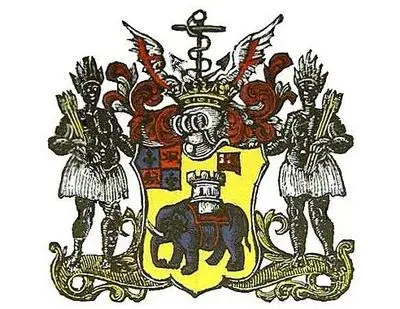
The Royal African Company (RAC) was an English mercantile (trading) company set up in 1660 by the royal Stuart family and City of London merchants to trade along the west coast of Africa. It was led by the Duke of York, who was the brother of Charles II and later took the throne as James II. It shipped more African slaves to the Americas than any other company in the history of the Atlantic slave trade.
