Jeff Miller Quotes
Reconciliation is a special budget procedure to change entitlement and tax laws. It cannot be filibustered and requires only a simple majority in the Senate to be passed. It is primarily intended for deficit and mandatory spending reduction.
Miller, Jeff. Congressional Record. Government Printing Office, 2010.


This was a typical argument in the 2012 battle between President Obama and the Republican conservatives. However, this was written 35 years earlier, when the exact same issue was polarizing politicians. The idea for taxing the rich more to reduce the deficit has been around since there was a Federal deficit. On most occasions the rich had enough political clout to avoid additional taxes for them and get the general public to pay instead of them. However, there have been times where they have not been able to avoid increased taxes. The New Deal lead by Franklin Delano Roosevelt and the Obama administration in 2013 were two such exceptions.


They were discussing the Civil Right Bill of 1964 which they all wanted to pass. See {605438} . However, they faced a filibuster from the Southern Senators who had always before used this tactic and blocked Civil Rights legislation. However, the President here committed himself to the one way to take most of the power out of the filibuster. Accept a shutdown of the Senate, give up the rest of the President’s legislative program but the filibuster blocks all legislation that the Southerners wanted like cotton and tobacco subsidies.

Kennedy, with great Republican support proposed a reduction of the top income tax rate from 91% to 65%, reduction of the bottom rate from 20% to 14%, and a reduction in the corporate tax rate from 52% to 47%. That put the tax rates at the appropriate level. Economic growth was reasonable until President Reagan’s military spending cold war strategy produced huge deficits, Clinton raised the tax rates slightly and had the best economic growth ever, and had a balanced budget. George W. Bush lowered taxes had much slower growth and even larger deficits. However, by 2013 all hints of bipartisanship were gone. The Republicans claimed that the then tax rates were much too high—the highest income tax was half the rate that most agreed in 1962 was the right rate. And the corporate tax was 35 %, far lower than the Kennedy rate of 47% and incredibly lower when we consider that with deductions that were then in force the average corporate tax was only 12% the lowest since the Great Depression. Meanwhile the 2008 Bush Economic Meltdown and the Great Recession it produced the highest deficits in history with the lowest taxes in modern times and much of the polarized population demanding further tax cuts and an equal number demanding increased tax revenue.


He and Bowles were the two leaders of the Presidential National Commission on Fiscal Responsibility and Reform. The commission recommendations to put the nation on a sound financial footing involved sacrifice by almost every sector of American society—everyone would have to give up something that they valued. So the initial reaction of almost every interest group was to oppose the plan. Over time however, there was a realization that unless the burden would be borne by some and not by others, the plan was reasonably fair. It illustrates the initial reaction of Americans to reform proposals is to retain all the benefits that they have and have others give up their benefits.

Discussing the care that must be taken in drafting tax legislation:

The President-elect was very circumspect with respect to Congress:


In the non-defense side of the budget a very large proportion of the budget is for entitlements like Social Security and Mediacre which are obligations that must be paid. The remainder, the smaller part is everything else--funding the cabinet departments, all the medical and sdcientific research, all the federal aid to public dchools and police departments, all the welfare, foodstamp and other programs for the poor, the costs of the Federal COurt System, the White House, the Congress, the State Department, foreign aid, Homeland security, weatehr forcasting, all the agricultural programs, and viirtually everything the governmetn does. In 2017 President Donals Trump submitted a budget to COngress that increased defense spending by a fulll 10 percent, and gave a hugh tax cut for the wealthy and the corporations. To balance the budget, he propsoed eliminateing man of the existing progrms like "Meals on Wheels" which brings at least 1 hot meal a day to homebound poor eldertly people, and a host of other critical programs. He had no previous experience with a government budget which was thoudands of times larger and more complex than any budget he had ever seen. So many in Congress, in both partiesd, were very critical of the budget and Congress then started to create its own buget. This quote expressed the heart of the problem.


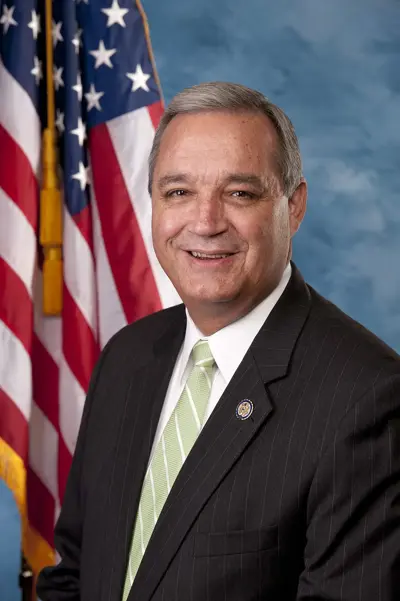
Jefferson Bingham Miller is an American politician who served as the U.S. Representative for Florida's 1st congressional district from 2001 to 2017. A member of the Republican Party, his district includes all of Escambia County, Santa Rosa County, Okaloosa County, Walton County, Holmes County and Washington County.
