Peter G. Peterson Quotes
To deal with entitlements we must either raise taxes, cut benefits, or borrow inordinate amounts of money.
Peter G. Peterson, U. S. Secretary of Commerce, Speech, Institute for International Economics, August 9, 2004
Sourced by: Eigen's Political and Historical Quotations


With entitlement programs, Congress and the Administration have very little control over the annual expenditures because once someone is legally entitled to a benefit, the government must pay it. It is not a matter of discretion but an obligation.


After many years of deficit financing, Clinton finally produced a balanced budget and together with his Secretary, of the Treasury, Robert Rubin, actually developed an economy which was producing a huge annual surplus that would soon eliminate the national debt. However, when George W. Bush replaced Clinton after two terms, Bush was unable to manage the budget any better than the other aspects of the Presidency. He cut taxes dramatically and even after it was clear that the Clinton surplus was squandered, he continued tax reductions and even increased them while increasing government spending creating the biggest government in history and went from our largest surplus to our largest deficit in his 8 years.


Commenting on the surplus in the fund:
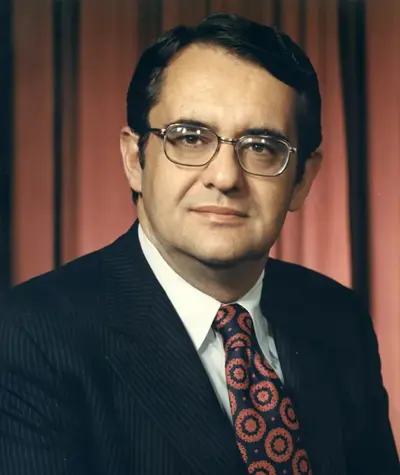
Peter George Peterson was an American investment banker who served as United States Secretary of Commerce from February 29, 1972, to February 1, 1973, under the Richard Nixon administration. Before serving as Secretary of Commerce, Peterson was also chairman and CEO of Bell & Howell from 1963 to 1971. From 1973 to 1984 he was chairman and CEO of Lehman Brothers. Later in 1985, he co-founded the private equity firm The Blackstone Group, and served as chairman. In the same year, Peterson became chairman of the Council on Foreign Relations, a position he held until his retirement in 2007 after which he was named chairman emeritus. In 2008, Peterson was ranked 149th on the "Forbes 400 Richest Americans" with a net worth of $2.8 billion. He was also known as founder and principal funder of The Peter G. Peterson Foundation, which is dedicated to promoting fiscal austerity.
