John Adams Quotes
Property is surely a right of mankind as real as liberty.
Adams, John. The Works of John Adams, Second President of the United States. Edited by Charles Francis Adams, vol. 6, Charles C. Little and James Brown, 1851, p. 9.

Day was often associated with left wing causes, but she was very hard to classify in traditional political terms. This quotation shows that unlike most communists and many socialists, she was an advocate of private property although she fought for the ability of a larger proportion of the population to have property.


See {587703} for a similar statement by a Supreme Court Justice.

See {638124} for how this Biblical passage evolved into a concept of property ownership


The people who raise the issue do not claim that property rights are not human rights. They do analyze different rights to priorities. For example, most people would view the right to life as more important than the right to travel. Unfortunately rights sometimes come into conflict. What Rand calls the “dichotomy” is the prioritizing of property fights as lower than some other rights such as the right to life. Those people would argue that a businessman should not have a facility that is a public hazard and interfere with his property rights to protect the lives of the public who might encounter the hazard.


In many countries, the king received all land and most property upon the death of a landowner.


The Romans were very organized regarding land ownership. When they conquered Africa, defeating Carthage, they found no written records of land ownership, no deeds, no bills of sale. Therefore, they opened up the entire land mass of Africa for what amounted to public colonization where the land could be worked and claimed legally. Illiterate Africans had no written records, and most areas where under the control of a strongman who “owned” all of the land with no notion of private ownership of land.

Earlier, treaties had been negotiated whereby whites purchased certain Indian lands. Tecumseh and others had objected not only to the concept of land sale, but to those who had sold the lands {612650}.

The Diggers were a religious-economic movement that even today would be considered very radical. They advocated the right of the poor to go onto public lands and farm them—thus the name “Diggers.” Beyond their opposition to the private ownership of land to the exclusion of the poor, Winstanley and the Diggers promulgated another very modern doctrine: That the poor should take the responsibility and have the right to determinine how the society should provide for the poor. A version of this became one of the Mottos of the Poverty Program of 1964. See {616966}.
The call for individual liberty and the right of personal property by clergy is surprising to many. This Cahier was the consensus of the Clergy of Blois in 1789. There were cahiers of several provinces of France—some by the clergy, some by the nobles. What is fascinating is the emergence of many of the pre-Revolutionary French concepts. The example of the American revolution and its principles was known throughout the educated classes of France.
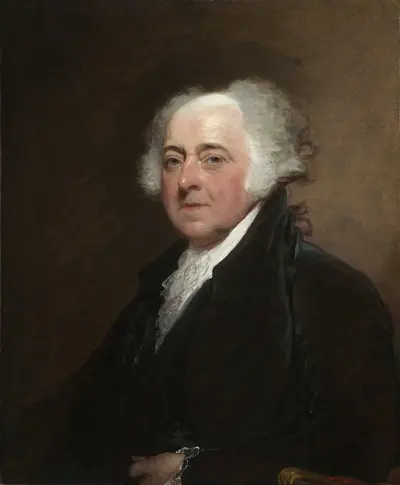
John Adams Jr. was an American statesman, attorney, diplomat, writer, and Founding Father who served as the second president of the United States from 1797 to 1801. Before his presidency, he was a leader of the American Revolution that achieved independence from Great Britain, and he served as the first vice president of the United States. Adams was a dedicated diarist and regularly corresponded with many important figures in early American history, including his wife and adviser Abigail Adams and Thomas Jefferson.
