Paul Erdos Quotes
Property is a nuisance.
Hoffman, Paul. The Man Who Loved Only Numbers: The Story of Paul Erdős and the Search for Mathematical Truth. Hyperion, 1998, p. 3.


Earlier, treaties had been negotiated whereby whites purchased certain Indian lands. Tecumseh and others had objected not only to the concept of land sale, but to those who had sold the lands {612650}.

Paine, one of America’s founding fathers and the man most responsible for influencing Americans to revolt, is generally not given much attention in modern times. One of the main reasons was that his philosophy regarding land and land ownership is today considered socialist if not communist. Paine’s other views are mostly Apple pie American, but this is shocking to many Americans.

Day was often associated with left wing causes, but she was very hard to classify in traditional political terms. This quotation shows that unlike most communists and many socialists, she was an advocate of private property although she fought for the ability of a larger proportion of the population to have property.

While generally true, Mises here again exaggerates his “proof” by selectively ignoring or being ignorant of counter-examples. The Roman Catholic Church is a classic counter-example where priests, monks, and others owned nothing as individuals, but produced some great science (eg Gregor Mendel), art (the illuminated texts of the middle ages), literature (St Thomas Aquinas, etc). The best counter example that was just evident in the last decade of Misis’ life is Communist Russia. Russian science was better than Fance and Germany and second only to the United States. The Russian ballet and orchestras were second to none. Great literature came out of the Soviet Union and the best of it complained about and attacked the Soviet system of the times. In general, Mises principle tended to be correct throughout history but not always as he dogmatically stated.

See {638124} for how this Biblical passage evolved into a concept of property ownership


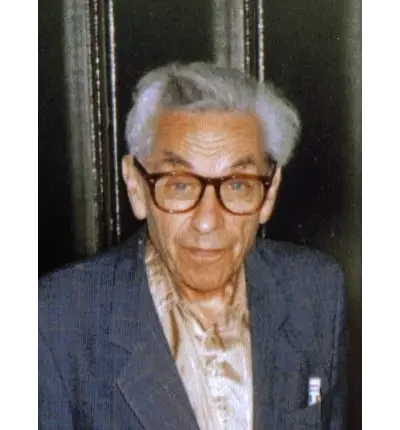
Paul Erdős was a renowned Hungarian mathematician. He was one of the most prolific mathematicians and producers of mathematical conjectures of the 20th century. He was known both for his social practice of mathematics (he engaged more than 500 collaborators) and for his eccentric lifestyle (Time magazine called him The Oddball's Oddball). He devoted his waking hours to mathematics, even into his later years—indeed, his death came only hours after he solved a geometry problem at a conference in Warsaw.
