Augier Ghislain de Busbecq Quotes
Persia is only delaying out fate; it cannot save us. When the Turks have settled with Persia they will fly at our throats, supported by the might of the whole East. How unprepared we are I dare not say.
The Ottoman Turks never did totally subdue Persia.
Augier Ghislain de Busbecq, 1522-1592, Flemish Diplomat, Ambassador of the Holy Roman Empire to the Court of Suleyman the Magnificent, Warning about the Ottoman threat to Christian Europe
Sourced by: Eigen's Political and Historical Quotations

The Ottoman Turks had just conquered the city of Constantinople including the Eastern Roman Empire in their domain. They would be the dominant power in the area until the First World War when they made the mistake of siding with the Germans and the Ottoman Empire was broken up in the Treaty of Versailles.

This historical quotation is important for two reasons, First, it shows us that the concept of a Canal was discussed fully a decade before Theodore Roosevelt actually had it built. Second, there were those who feared that a canal would actually be a detriment to the United States as our Navy was then quite weak. TR however built up the navy and made a great world-wide show of it and also built the Panama Canal.

The Persians arrived at an abandoned city and burned some of the major buildings. All the Athenian men went to the island of Salamis where he gathered Greeks from the other city states. They boarded ships and tricked the march larger Persian fleet into coming into the narrow part of the straits where it could not maneuver. The Greeks destroyed the Persian fleet with relatively few losses and with it went Xerxes dreams of conquest of the Greeks. The Persian navy could not feed their army and the Persians, the greatest empire of the day, retuned to Persia in defeat.

This verse is quoted in the Constitution of Iran (Article 151) in the section regarding it's military establishment.


President George W. Bush repeated this quotation after 9-11.

Pointing to the armed Spartan men He had been asked why there were no city walls around Sparta. See {632266} for a related quotation.


Earlier in the Arab-Israeli conflict United Nations troops were stationed at the borders to prevent either side from attacking the other. The Arabs mounted a major attack and the United Nations troops ran and did not fight. Ever since then, Israel policy was never to depend on any other than Israel to defend the country and the people.


Napoleon was finally stopped by a multinational coalition led by England.
There was an international conference on the worldwide drug problem.


What is interesting about this quote is that it is very much like many American politicians who support a large and strong military.


This was the address where FDR used the “arsenal of democracy” phrase which became so famous. A similar phrase was used in May by Robert E. Sherwood--{624748}. Then Jean Monnet began to use the exact phrase in Mid 1940--{624746}. He almost certainly had read Sherwood’s earlier, similar phrase. However so had Presidential Aid Harry Hopkins who thought that it would be a good phrase for President Roosevelt to use to “brand” the activity of the United States. So diplomatically, Monnet was asked not to use the phrase any more, and he acceded to the request. At the end of the year, FDR gave his address with this quotation.
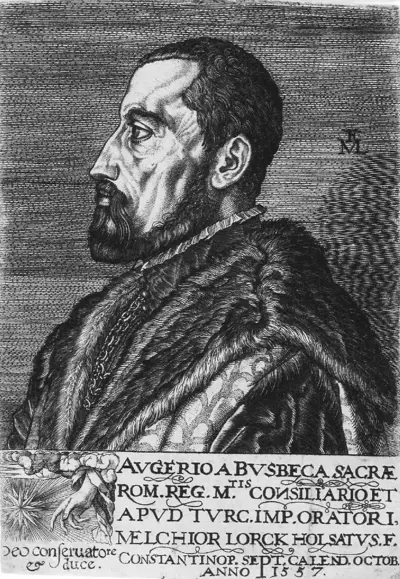
Ogier Ghiselin de Busbecq, sometimes Augier Ghislain de Busbecq, was a 16th-century Flemish writer, herbalist and diplomat in the employ of three generations of Austrian monarchs. He served as ambassador to the Ottoman Empire in Constantinople and in 1581 published a book about his time there, Itinera Constantinopolitanum et Amasianum, re-published in 1595 under the title of Turcicae epistolae or Turkish Letters. His letters also contain the only surviving word list of Crimean Gothic, a Germanic dialect spoken at the time in some isolated regions of Crimea. He is credited with the introduction of tulips into western Europe and to the origin of their name.
