John A. Hobson Quotes
Our practical success in preserving order, securing justice and developing the material resources of many of our colonies is largely due to the fact that we have learnt to employ native agents wherever possible for detailed work of administration, and to adapt our government, where it can be safely done, to native conditions.
Hobson, like Mark Twain in America, was a major critic of imperialism.
John A. Hobson, 1858–1940, English economist, social scientist & political critic, The Political Significance of Imperialism, Part II: The Politics of Imperialism, Imperialism, A Study, 1902
Sourced by: Eigen's Political and Historical Quotations


The “We” to which he was referring were the British officials and civil servants who governed all of India as a colony of the British Empire.

The planners of this particular war effort involved many ideologically correct supporters of a neo conservative agenda from the United States and the other Allies more knowledgeable diplomats and military people were kept our of the effort lest they disagree with administration ideology or policy. The result was a very badly mismanaged occupation phase of the war after a very well managed invasion effort.


The White Africaners were attacking the Blacks to force them off their land so the Afrkaners could take over. The country was under British rule and the unarmed Blacks were being slaughtered by the Afrikaners who were British Subjects. Eventually the Boer War set the English against the Afrikaners. See {583902} for a related quotation.


Justification for policy of settling all Indians west of the Mississippi River.


One of the reasons that Jefferson and others were so anxious to expand the territory of the United States was that Britain had operated with the policy that curtailed and limited the population growth of the American colonies and the resentment of this policy led to growth of America and the Westward expansion.

That is exactly what happened. However it would not happen until after the Second World War.
The King was concerned because many of the English living in Ireland were “going native” and he also thought that if the Irish could become more civilized they could be assimilated instead of having to control them with expensive troops. To some extent this actually worked, especially in speaking English, but the entire law was very difficult to enforce. It did however, keep the Englishmen from departing from English dress, speech and household arrangements.

Taft was making his first appearance as the newly appointed Governor General of the Philippines. Prior, the country had been administered by General Arthur MacArthur, father of General Douglas MacArthur, and some military officers and a few civilians, and the results had been quite poor—not unlike the administration of Iraq after the Iraq War at the beginning of the 21st century. However, unlike the Iraq situation, Taft admitted our failings and explained them, as shown in this quotation. He learned fast and had good instincts and developed a cadre of excellent administrators who got along very well with the people and did a good job.

Executed by the English for his part in the Easter Uprising. He was criticizing his fellow Irish. During the English conquest, Gaelic was often prohibited and almost totally disappeared. Since independence there have been various movements to revitalize the old Gaelic language but this have not gotten very far.


The British saw the American colonies and the East Coast Canadian provinces all as their North American possessions. With the growing dissatisfaction of the New England and other Colonies, the British wanted to secure Quebec as a safe base where there were few rebels. Fox, of the opposition, criticized the heavy-handed control of Quebec wanting to give the rights of Englishmen under the English Constitution to all citizens of the North American colonies. Had Britain done so, there may never have been an American Revolution.
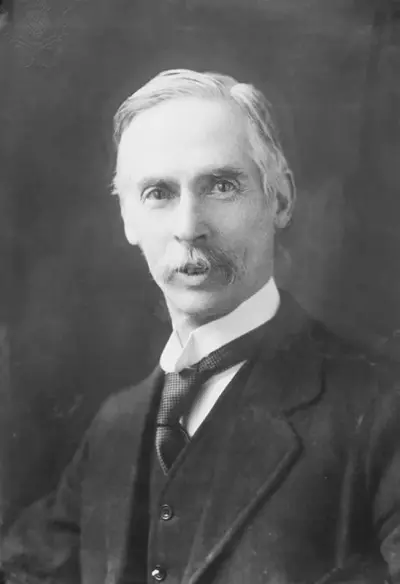
John Atkinson Hobson was an English economist and social scientist. Hobson is best known for his writing on imperialism, which influenced Vladimir Lenin and his theory of underconsumption.
