William Pitt the Younger Quotes
When two countries are connected together, like England and her colonies, without being incorporated, the one must necessarily govern; the greater must rule the less; but so rule it, as not to contradict the fundamental principles that are common to both.
William Pitt, 1708-1778, 1st Earl of Chatham, British Prime Minister, Secretary of State, Lord Privy Seal & leader of the House of Commons, Speech, House of Commons, February 4, 1738
Sourced by: Eigen's Political and Historical Quotations


Executed by the English for his part in the Easter Uprising. He was criticizing his fellow Irish. During the English conquest, Gaelic was often prohibited and almost totally disappeared. Since independence there have been various movements to revitalize the old Gaelic language but this have not gotten very far.

Frederick the Great. He and many other Europeans thought that England had been so preoccupied with the American rebellion that she was ignoring Europe and other traditional foreign policy interests of theirs.

Some of the Patriots of Early America realized that the oppressions of British rule were coming from Parliament and initially took the position that only the King could make laws for the colonies and not Parliament. Therefore, they were as Englishmen challenging illegal English laws. Most American hostility was directed at Parliament and not the King. However, once there was any physical resistance, King George came down with such a heavy hand that American hatred transferred to him. For related quotes on the King/Parliament issue, see {639145}, {639144}, {639142}, {639141}, {639140}, & {639137}

The message was conveyed by the Secretary of State, Sir George Calvert (Lord Baltimore). Parliament and the British King were jockeying for position in their relative powers. King James took the position that Parliament could NOT make laws that affected the American Colonies. Parliament disagreed. Later, some of the American patriots would use this quotation to claim that they were only subject to the King and not to Parliament. For related quotes on the King/Parliament issue, see {639144}, {639143}, {639142}, {639141}, {639140}, & {639137}
This was not the ravings of a right wing extremist. It was normative for Prussia as a whole. Right wing extremism as we think of it today was the norm of the ruling classes in Prussia and other parts of Germany. This book was a best seller in Germany. This quotation illustrates the mentality of the conservative, militarist, culture that dominated Germany at the time. The German aggression of WWI was not even considered as immoral but a God-given right.


Coping with the French and their Indian allies was a problem for all the American colonies and Franklin was the strongest voice for some kind of union or federation for not only mutual defense, but to facilitate commerce by having some uniform currency and basic laws of trade to promote the mutual economy. The 6 Iroquois tribes had years ago formed the Iroquois nation complete with a formal constitution that maintained tribal identity but also enabled unified action if any were attacked and provided mutual assistance on a number of economic areas. They became the strongest, wealthiest, healthiest and most sophisticated nation of North America before European colonization and unlike many other Indians with a few exceptions–see {21747} for an example–got along very well with the English colonists. Franklin was a great admirer and wanted to use some of their Constitutional provisions in the American Constitution 36 years later, but at the time tried to embarrass many American's into forming a union with language like this quote. Actually, he did not think of them as savages at all, but most Americans who knew little about them did, and Franklin was never above using people's prejudices to get them to buy into one of his political ideas.

Hobson, like Mark Twain in America, was a major critic of imperialism.

William the Conqueror. The King had come ashore and fell forward in the sand on his face and hands. Showing a sense of humor, he hade this statement. Shortly thereafter he took England militarily at Hastings and seized it politically.

The Parliament was debating the reaction to the Stamp Act by the American Colonies. One of the members, reflecting a majority view, asked sarcastically when the American Colonies had been emancipated so that they could make their own independent decisions. Pitt then hit this one out of the park by reversing the question.
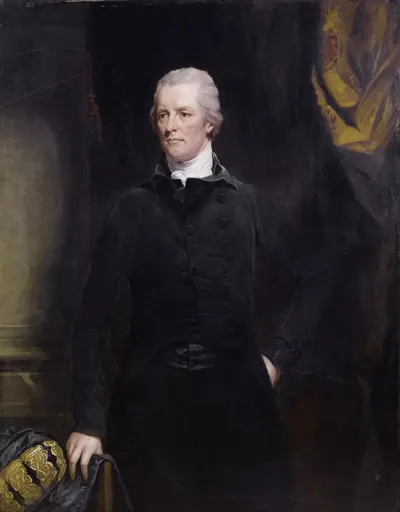
William Pitt the Younger was a prominent British Tory statesman of the late eighteenth and early nineteenth centuries. He became the youngest prime minister of Great Britain in 1783 at the age of 24 and the first prime minister of the United Kingdom of Great Britain and Ireland as of January 1801. He left office in March 1801, but served as prime minister again from 1804 until his death in 1806. He was also Chancellor of the Exchequer for all of his time as prime minister. He is known as "the Younger" to distinguish him from his father, William Pitt, 1st Earl of Chatham, who is customarily referred to as "William Pitt the Elder" (or less commonly, simply "Chatham") and had previously served as prime minister.
