Slobodan Milosevic Quotes
Countries under foreign command quickly forget their history, their past, their tradition, their national symbols, their way of living, often their own literary language.
Slobodan Milosevic, President of Serbia, Statement about nations under foreign occupation
Sourced by: Eigen's Political and Historical Quotations


1st Earl of Beaconsfield


Dayan was a strong advocate for co-existence with the Arabs and an understanding of their frustrations and disappointments without bowing to the extremists who wanted to destroy Israel.


Samuel Langhorne Clemens, 1835-1910. Twain was one of the few whites who realized that success in assimilating American Indians would destroy their culture and identity. Even today, whites and Indians alike constantly debate the desirability of assimilation policies and supporting independent reservations.

This has been a classic dilemma for all large multi ethnic states—trying to develop a sense of unity of citizenship in the face of populations who think of themselves foremost differently. Attempts like this of banning the names of the peoples from official use, banning languages, changing people’s names, requiring common dress and other such methods have failed in most cases (Ataturk’s Turkey being the notable exception). America, Great Britain and the Soviet Union showed the world that it was possible to have a strong sense of national unity and at the same time allow peoples, cultures, and ethnicities to maintain their own ethnic identities. However, many modern governments see their situation as so unique that ethnic repression of one kind or another is required. Modern China, in particular, while not as extreme as Sun Yat-Sen still makes it very difficult for certain cultures to thrive such as the Tibetans. Note that even in the United States we have many who argue that non English language usage should be discouraged and disapprove of the concept of hyphenated Americans. For example, see Theodore Roosevelt {631377}.


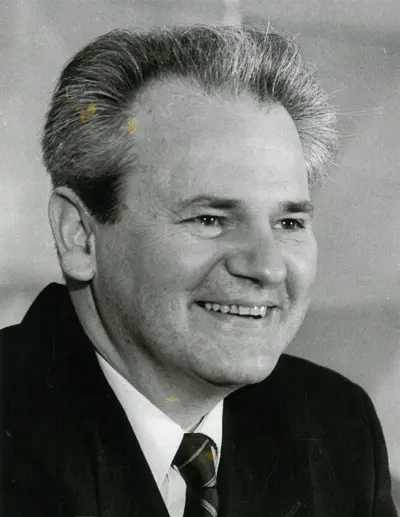
Slobodan Milošević was a Yugoslav and Serbian politician who served as the President of Serbia (originally the Socialist Republic of Serbia, a constituent republic within the Socialist Federal Republic of Yugoslavia) from 1989 to 1992 and within the Federal Republic of Yugoslavia from 1992 to 1997, and President of the Federal Republic of Yugoslavia from 1997 to 2000. He led the Socialist Party of Serbia from its foundation in 1990 and rose to power as Serbian President during efforts to reform the 1974 Constitution of Yugoslavia in response to alleged marginalization of Serbia, views that Serbia's autonomous provinces had too much power, making them almost independent from Serbia, and claims of political incapacity to deter Albanian separatist unrest in Serbia's autonomous province of Kosovo.
