Jimmy Carter Quotes
Our Nation can be strong abroad only if it is strong at home. And we know that the best way to enhance freedom in other lands is to demonstrate here that our democratic system is worthy of emulation.
Jimmy Carter, 39th President of the United States (Democrat, GA), Inaugural Address, January 29, 1977
Sourced by: Eigen's Political and Historical Quotations

With reference to foreign trade:


China, which had been one of the strongest and most modern nations in the world for 1000 years had lapsed into decay and though a huge nation, rich in resources, with more people than any other had been eclipsed by Japan, America and Europe. Cixi was determined to remedy that, and to a great extent started China on the road to modernization which would take over 100 years more.


This was another of the views of the fascists that drove much of their policies and practices but are demonstrably untrue. The world has many countries that have little power or world respect and yet the people are very happy. Luxemburg, Monaco, Finland and the Baltic Countries are just a few of the counter-examples.


During her adult life, she was the de facto ruler of China. This quotation is very important because it gives us an important insight into Chinese motives and historical drivers. The first reason is something almost all countries and cultures can identify with, but the second--to avoid being looked down—was just as important. Americans are relatively uncaring what the citizens of other countries think about them, but the Chinese do. So do other nationalities and cultures like the Arabs, the Iranians, many of the South American cultures. Often it takes on a different world like “dignity” or “respect”.
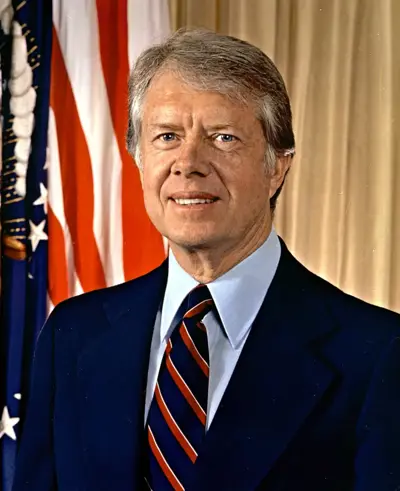
James Earl Carter Jr. is an American politician, businessman, and philanthropist who served as the 39th president of the United States from 1977 to 1981. A member of the Democratic Party, he previously served as a Georgia State Senator from 1963 to 1967 and as the 76th governor of Georgia from 1971 to 1975. Since leaving the presidency, Carter has remained engaged in political and social projects as a private citizen. In 2002, he was awarded the Nobel Peace Prize for his work in co-founding the Carter Center.
