Seamus Heaney Quotes
One of the very first poems I wrote was Docker That fist would drop a hammer on a Catholic and one of the sturdiest was Requiem for the Croppies, written 50 years after 1916 [the year of the Easter Rising]. Being responsible and what it means, what it demands, have indeed preoccupied me maybe too much. But this is it, this is the thing, this is what you're up against.
O'Driscoll, Dennis. Stepping Stones: Interviews with Seamus Heaney. Farrar, Straus and Giroux, 2008.


This is a very controversial Franklin quotation. In fact, Franklin never sent this letter to Strahan, but it is one of the most famous of the Franklin quotations. It was even famous in 1775. Franklin saw to it that copies of his “letter” reached most American newspaper editors, many of who reprinted it. It was not the first time that an American politician had made quotations for domestic consumption only, and it certainly was not the last. So Franklin never said this to his friend Strahan, but he did claim that he did to all who Americans who would listen. The result is that Franklin developed a reputation for really ‘telling off those Englishmen.’ This was important for him because since he had many friends and admirers in England, he was suspect to many anti-British Americans.

The Egyptian Muslim Brotherhood had won the first democratic election, but they proceeded to use their majority to deny rights to others. Massive demonstrations against the government, with the Egyptian military support deposed the Brotherhood President and government. The Brotherhood then took to the streets, demonstrating against the ousting of their elected government. After more than a week of constant demonstrations and the blockage of many streets, the new military appointed government authorized the police to clear the streets. Some of the Brotherhood were armed and killed over 40 police and several hundred demonstrators were also killed with each side blaming the other for “starting” the violence. The vice president was a strong opponent of the Muslim Brotherhood and supported and called for the ousting of their undemocratic, albeit elected, government. However he also supported their right to protest in the streets and condemned the use of force.


This proverb only makes sense in the light of understanding the Arab concept of revenge—“blood.” In a rural desert environment where little can be expected of government, the Arabs have developed a law enforcement and peace keeping mechanism which while primitive from modern standards, nevertheless worked to some degree. It is that revenge—“blood” is a moral necessity and obligation of all people, and revenge is not limited by time or to the individuals involved in the first incidence. The immediate family are the first to exact revenge, but the extended family follows and often the entire clan. Sometimes revenge is tribal or even national. Anyone who fails to revenge a member in his group is not only a disgrace, but is a clear and present danger to the group because then they can be attacked with impunity. So revenge is a strong obligation of the group members and blood must be paid with blood no matter how many generations it may take. The only thing that keeps me and my family safe, is the surety what whosoever kills one of us will themselves be killed or if they die a natural death we will take revenge on one of the evildoers relatives. Crime must never pay! Needless to say, this often produces cycles of violence that might never end but for the principle of this proverb—that the obligation of revenge is heavier upon the relatives of the first victim than upon this who are seeking revenge for previous acts of vengeance.


The moral imperative of submission rather than allowing a war started by the aggressor, logical for Pizarro and Church leaders of the time, is the same logic of aggressors from Adolf Hitler to Saddam Hussein.


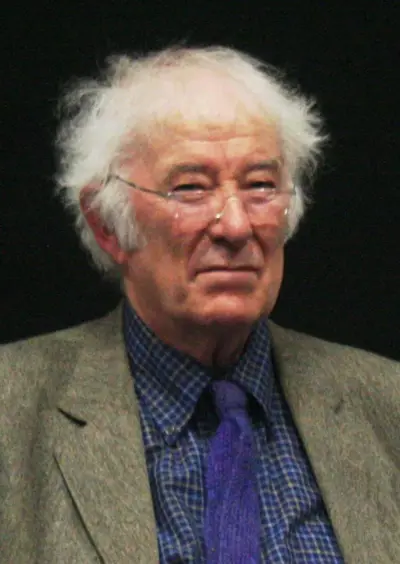
Seamus Justin Heaney MRIA was an Irish poet, playwright and translator. He received the 1995 Nobel Prize in Literature. Among his best-known works is Death of a Naturalist (1966), his first major published volume. Heaney was and is still recognised as one of the principal contributors to poetry in Ireland during his lifetime. American poet Robert Lowell described him as "the most important Irish poet since Yeats", and many others, including the academic John Sutherland, have said that he was "the greatest poet of our age". Robert Pinsky has stated that "with his wonderful gift of eye and ear Heaney has the gift of the story-teller." Upon his death in 2013, The Independent described him as "probably the best-known poet in the world".
