Fanny Kemble Quotes
[On John Brown:] The poor wretch is hanged, but from his grave a root of bitterness will spring, the fruit of which at no distant day may be disunion and civil war.
Kemble, Frances Anne. Further Records, 1848-1883. Richard Bentley and Son, 1890, p. 195.


This is a wonderful quotation which illustrates the polarization which had taken place in America as a result of the slavery issue. Lincoln’s address—which history and most people have adjudged to be such a moderate attempt to find common ground, and which offended many of his constituents because he was compromising and temporizing on the slavery issue—was seen as the radical attacks of a “fanatic”. There is probably no policy that Lincoln or any other President could have followed that would be even marginally acceptable to the slave owners and their economies and the abolitionists and their economies. In the final analysis, slavery was the kind of issue that is not susceptible to compromise. No nation can exist half slave and half free. The Civil War was inevitable unless the South would give up slavery or the North would accept it.


His prediction would come true 72 years later. He was a slave trader and a strong supporter of the institution. See {624060}. However unlike most slave supporting Southerners, he came from one of the richest families of New England. His own brother Moses Brown was an ardent abolitionist and John was able to see the arguments and forces lined up against slavery. He saw that abolitionists as the trouble makers because they were trying to change the status quo. Having much experience with Southerners and selling them many slaves, he realized early how the South was totally dependent on slavery for its economic and social way of life. Few Americans had that broad a perspective.


The issue is whether Kansas would enter the Union as a slave state of a free state. If a free state, the free states would be able to block further slavery. If Kansas were to become a slave state, the slave states would have a sufficient majority to make all future expansion hospitable to slavery. The slavery forces started sending men and families into Kansas so that they could vote; the abolitionists did the same. Both sides armed and a war began with each faction trying to kill or drive the other faction out of Kansas before the vote. See {612516} for the anti-slavery perspective.

Butler was at the time the Union general in charge of Louisiana. He had on his hand a large group of slaves whose owners had abandoned the area. There was no emancipation yet. He wrote for instructions. The result was the first actual emancipation of slaves.


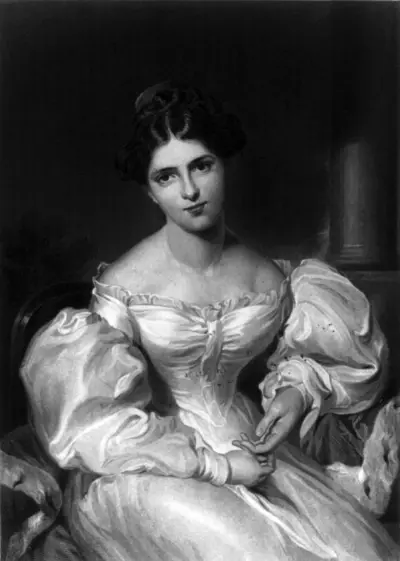
Frances Anne "Fanny" Kemble was a British actress from a theatre family in the early and mid-19th century. She was a well-known and popular writer and abolitionist, whose published works included plays, poetry, eleven volumes of memoirs, travel writing and works about the theatre.
