John Niven Quotes
The Confederate flag was the flag of the American South during the civil war. It was the flag of people who were fighting against their own government in an attempt to retain slavery. It was the flag of people who thought slavery was no problem, who thought slavery was a good thing.
Niven, John. "John Niven." Sunday Mail, Scottish Daily Record and Sunday Mail, 2015.

The Southern states were illegal rebels. A confederacy had always meant a voluntary association of otherwise independent entities. However technically the Southern states were not independent but in a state of illegal rebellion against the United States. Lincoln, a lawyer, could not being himself to refer to the South by their preferred name—the Confederacy. So this was how he and many in his administration referred to the South.


As just one example of Southern States' reasons, see {583044}. Many of the Northern States had passed laws declaring everyone in the state was free and making it illegal to return or assist in the returning of escaped slaves. The Southerners got the Federal Fugitive Slave Act passed which required all Americans to assist in recapturing escaped slaves. It was the Northern States who claimed states' rights were being trampled. The South was vehemently opposed to States' Rights when it came to allowing individual states to decide who was free and who was not. The Southerners had only one fundamental reason for secession—the maintenance of the Negro slavery system on which much of their economy depended as did their sociology, culture, and way of life.

The Prime Minister had a penchant for mis-assessing world affairs in both the old world and the new.


Ingersoll was considered to be the greatest orator and political thinker of his day, but his overt atheistic views curtailed his elected political career.


Some Southerners, in order to obtain support in England for the Confederate cause claimed in their propaganda that slavery was not the issue but their issue with the Union was just one of local and regional autonomy. The British and most Europeans at that time were strongly against slavery so this “spin” might have gotten some support. Stowe and others put the lie to this, and the Confederacy never did get any significant material support from any country in Europe. The secession resolutions of the Southern States all state that Slavery was the cause (and often the ONLY cause stated) of secession. Also Southern General Mosby, called the spin for what it was. See {584991}.


He stated that he had a vision and made these two prophesies that indeed came true. The first was the South Carolina secession starting the Civil War. The second, when the North used former slaves as soldiers who fought their old masters.


This is an important quotation because it helps to dispel a myth that the Civil War was not about slavery. That was the reason that the rebelling states gave for secession, but apologists for the Confederacy have claimed that the average soldier on both sides did not care about slavery. (Two thirds of the Southern Soldiers came from families that did not own slaves; nonetheless it was clear that the main motivation of the Confederate Soldier was to protect the institution of slavery, while that of the Union soldiers was to destroy slavery.) Professor Manning found this in her book: What This Cruel War Was Over: Soldiers, Slavery, and the Civil War.

The Confederates were very clear that slavery was the cause of the war. Revisionists later tried to add other motives to the Southern cause, but Grant and all the contemporaries on both sides knew slavery was the crux of the matter. So the Confederate cause was the right to brutalize, torture, and even kill an unwilling labor force that was unpaid. No war in history had ever been fought for such a lowly cause and the Confederate leadership skills were amazing in keeping up morale without a decent cause to fight for.

He had been a politician and was serving in the Union Army. At the time he was an Army officer just returned from the front and was not yet president.


And so they were. However, Calhoun had already concluded which alternatives the South would take. See {635930}
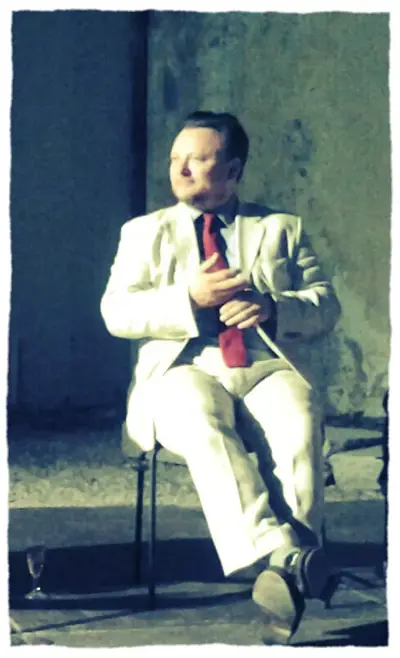
John Niven (born 1968) is a Scottish author and screenwriter. His books include Kill Your Friends, The Amateurs, and The Second Coming.
