Alfred, Lord Tennyson Quotes
O smallest among peoples! rough rock-throne Of Freedom! warriors beating back the swarm Of Turkish Islam for five hundred years, Great Tsernogora! never since thine own Black ridges drew the cloud and brake the storm Has breathed a race of mightier mountaineers.
Note the language “swarm of Turkish Islam” which was a classic technique of dehumanizing the enemy, especially effective when done by a humanist in poetry. The metaphor of Muslims as insects was little different from the Ottoman Islamic characterization of Christians as “spawn of the Devil” and the like. Historically, the Montenegro people fought for the independence from both the Ottomans and the Serbians who, even into the 21st century strove to have Montenegro a part of or subservient to Serbia.
Alfred Tennyson, 1809-1892, British Poet, Member of the House of Lords, Poem “Montenegro”
Sourced by: Eigen's Political and Historical Quotations

The Muslims were poised to make the final assault on Constantinople. Religious leaders were whipping up the troops by calling for Jihad and telling them those who fell in battle would enjoy immediate access to Paradise and the virgins that went with Islamic martyrdom. However, the Sultan did not trust religious fervor alone. He said this to the leaders of his soldiers who then spread the word. The City fell the next day. The troops had 3 days of looting, rape and pillage which the Sultan had promised, but there was almost no further damage to the infrastructure other than that caused by the seige cannons.

The Nazis occupied the cities, but the partisans survived in the mountains. The resistance was ferocious and very effective. From a German Soldier’s point of view, the Yugoslav front was the most dangerous assignment where his odds of being killed was even greater than the Russian front.

This newspaper was an English language organ published by General Allenby’s British and Allied forces in the Middle East. Prior to the war, the Middle East was all part of the Ottoman Empire. However, the Ottoman Turks sided with Germany in WWI and their Middle East dominions were targets for the allied military strategy.


The Turks could not take the city then, but they did 56 years later in 1453.

The Ottoman Turks had already conquered the Eastern Roman empire outside of Byzantium. They had overwhelming superiority and it was just a matter of time when they would take the city. Surrender would have been the sensible course, but religious passion against surrendering the holy city capital of Christendom to the Muslims was dominant in the Emperor and some of the leadership. But the morale of most was very low—and for good reason. The Ottomans soon captured the city.
The Emperor had sent a challenging message to the young Ottoman Sultan {634798}. Constantine would not negotiate terms of surrender despite the overwhelming strength of the Turkish forces. The Sultan attacked and took the city in a battle where not only was Constantine killed but a large part of his people as well. The Muslims have held Byzantium (Constantinople, now Istanbul) since.

This quotation illustrates that the Muslim conquest and attempt to destroy and desecrate the symbols of other religions was not limited to Christianity—it was ALL other religions. In that sense, Christianity and Islam of the period were very similar at the time—intolerance to the point of murder and destruction of any “heathen” religion.

The critic observed that the South would not give up their slaves voluntarily and that and that vigorous abolition pressure on the South would lead to war and asked Angelina if she would want a civil war. Grimke’s response was predictive of what happened—the most terrible was in U. S. History to end the most terrible cruelty and persecution in American history. Note that she herself was willing to die to end slavery. See {629094}.


Mullahs are Muslim Clerics who at the time controlled Iran which was a Fundamentalist, Islamic Theocracy.

The eighty years refer to the time since the fall of the Ottoman Empire which is looked upon by many Muslims as a dual disaster: The West destroying the last Muslim military geopolitical state and the rise of modern Turkey as a secular state.

Greece had always coveted Anatolia which was a part of the Ottoman Empire but had been in antiquity a Greek dominated area. Further, people of Greek ethnicity and culture, who hundreds of years ago use to be the vast majority were after the hundreds of years of Ottoman rule and migration were then the largest minority in Anatolia. After the Turks lost the First World War as a consequence of their allying with Germany, and had been stripped of its Arab territories. Also, Turkey had just undergone a revolution and the old order was displaced. Venizelos saw this as an opportunity to get back Anatolia and sent a military invasion force to land at Smyrna (Ismir to the Turks), the largest city of Anatolia where despite the Greek minority in all of Anatolia, Greeks were a small majority in Smyrna. Greece was accused of making war on the Muslim Ottoman Turks. This was his answer to the British press. The invasion was initially successful but was then repulsed by the Turk revolutionists lead by their great patriot Ataturk who defeated the Greek forces handily despite the fact that they were hastily organized, untrained together, and much more poorly equipped than the Greeks. Turkey was very corrupt until the Ataturk reforms, but Greece was arguably even moreso.


Greece had always coveted Anatolia which was a part of the Ottoman Empire but had been in antiquity a Greek dominated area. Further, people of Greek ethnicity and culture, who hundreds of years ago used to be the vast majority were, after the hundreds of years of Ottoman rule and migration, were then the largest minority in Anatolia. The Turks lost the First World War as a consequence of their allying with Germany, and had been stripped of their vast Arab territories. Also, Turkey had just undergone a revolution and the old order was displaced. Greek Nationalist Prime Minister Venizelos saw this as an opportunity to get back Anatolia and sent a military invasion force to land at Smyrna (Ismir to the Turks), the largest city of Anatolia where despite the Greek minority in all of Anatolia, Greeks were a small majority in Smyrna. The invasion was initially successful but was then repulsed by the Turk revolutionists lead by their great patriot Ataturk who counterattacked and defeated the Greek forces handily despite the fact that they were hastily organized, untrained together, and much more poorly equipped than the Greeks. However, the Greeks in their retreat, followed a scorched earth policy and as this quotation shows, committed many atrocities against the Turkish civilian villages.


Greece was then a small country and Turkey a giant world power as the Ottoman Empire. The had been nothing adverse in US relations with the Turks and yet here was a US president emotionally siding with the Greeks against the Turks. There were two reasons. First, we were in constant conflict with the Barbary States which were Muslims as were the Turks. Americans, not ignorant of the Crusades and the historical conflict tended to side with their co-religionists. Second, the Ottoman Empire was as non-republican and undemocratic as the worst monarchies, and Greece was fighting for its freedom. It is hard to tell which factor was more influential.
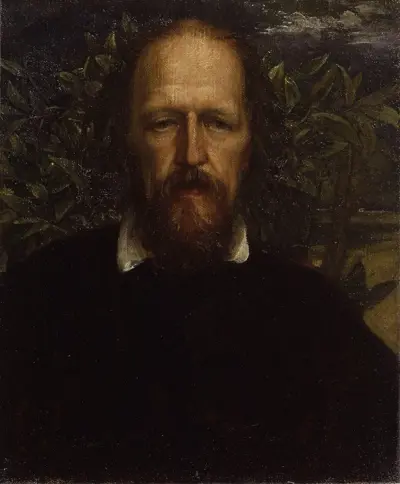
Alfred Tennyson, 1st Baron Tennyson FRS was a British poet. He was the Poet Laureate during much of Queen Victoria's reign and remains one of the most popular British poets. In 1829, Tennyson was awarded the Chancellor's Gold Medal at Cambridge for one of his first pieces, "Timbuktu". He published his first solo collection of poems, Poems Chiefly Lyrical in 1830. "Claribel" and "Mariana", which remain some of Tennyson's most celebrated poems, were included in this volume. Although decried by some critics as overly sentimental, his verse soon proved popular and brought Tennyson to the attention of well-known writers of the day, including Samuel Taylor Coleridge. Tennyson's early poetry, with its medievalism and powerful visual imagery, was a major influence on the Pre-Raphaelite Brotherhood.
