Mohammed II Quotes
The city and the buildings are mine; but I resign to your valor the captives and the spoil, the treasures of gold and beauty ; be rich and be happy.
The Muslims were poised to make the final assault on Constantinople. Religious leaders were whipping up the troops by calling for Jihad and telling them those who fell in battle would enjoy immediate access to Paradise and the virgins that went with Islamic martyrdom. However, the Sultan did not trust religious fervor alone. He said this to the leaders of his soldiers who then spread the word. The City fell the next day. The troops had 3 days of looting, rape and pillage which the Sultan had promised, but there was almost no further damage to the infrastructure other than that caused by the seige cannons.
Mehmed II, 1432-1481, Ottoman Turkish Sultan, Speech to his Officers immediately before, the siege of Constantinople, 1453
Sourced by: Eigen's Political and Historical Quotations


The Ottoman Turks had already conquered the Eastern Roman empire outside of Byzantium. They had overwhelming superiority and it was just a matter of time when they would take the city. Surrender would have been the sensible course, but religious passion against surrendering the holy city capital of Christendom to the Muslims was dominant in the Emperor and some of the leadership. But the morale of most was very low—and for good reason. The Ottomans soon captured the city.


In the 18th Century, the Islamic Barbary States combined their religious beliefs for Jihad against non-believers with a classic criminal enterprise--piracy. They would authorize corsairs to outfit ships and attack Christian merchant ships on the high seas. They would capture the ship and the cargo, which would be split with the ruler of the country. The crew and passengers would by “rented out” as slaves until they would be ransomed, the proceeds of which would also be shared. To motivate a larger ransom, the captives were regularly tortured as well as worked almost to death. The Barbary Pirates encouraged the “slaves” to write to their relatives, friends and governments to try and raise the ransom. Individual Christian countries were offered a “treaty” whereby for an annual payment of tribute to the Barbary country, the corsairs of that country would not attack ships flying the flag of the country that paid the tribute. The Christian country had to make 4 different tribute payments to each of the 4 Barbary nations. Most of the European powers were paying the tribute even though some could easily defeat the Corsair navies in a war. The cost of outfitting a fleet for war was much more greater than paying the tribute. The new nation of the United States was good pickings for the Barbary pirates and there was a period of several decades where the Americans had to create a policy to pay tribute or go to war. At different times America did both. Jefferson argued for War rather than pay the blackmail tribute.

The Turks could not take the city then, but they did 56 years later in 1453.

Note the language “swarm of Turkish Islam” which was a classic technique of dehumanizing the enemy, especially effective when done by a humanist in poetry. The metaphor of Muslims as insects was little different from the Ottoman Islamic characterization of Christians as “spawn of the Devil” and the like. Historically, the Montenegro people fought for the independence from both the Ottomans and the Serbians who, even into the 21st century strove to have Montenegro a part of or subservient to Serbia.

This statement is perhaps the greatest and most eloquent description of the United States exceptionalism and its behavior in WWII. Such a statement could only come from a non-American.


The Muslims conquered Spain and controlled it to one extent or another for 600 years.


Jean the Good. It was not uncommon for wealthy nobles who were about to be defeated on the field of battle to offer bribes to the opposition soldiers to take them to their lines or headquarters. However, the leaders of the Army wanted to have charge of the important prisoners and the terms of their potential ransom. In this case the English knights started fighting amongst themselves as to who would take and ransom the French King, when two high ranking English nobles who had been dispatched by the Prince of Wales to look for the French King. They ordered the knights to desist their internal fighting, and the French King was delivered to the Prince of Wales.


The historical import of this quotation is that North Carolina was unable to support its troops fighting in Virginia so they resorted to asking for private donations. In addition greedy speculators were offering inflated prices to citizens for needed military supplies and after buying them jacking the price up much higher and selling it to the state who because of the lack of productivity, the men in the field and the Union embargo had very few options to obtain needed supplies.
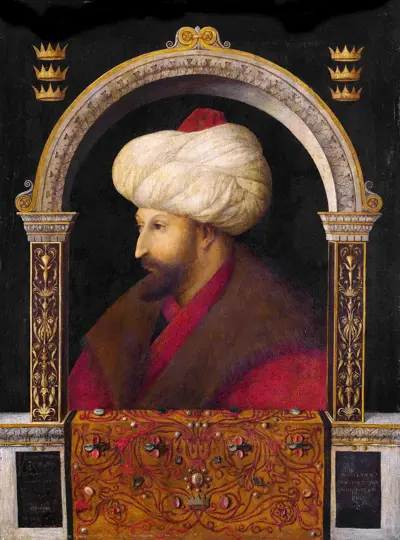
Mehmed II, commonly known as Mehmed the Conqueror, was an Ottoman sultan who ruled from August 1444 to September 1446, and then later from February 1451 to May 1481. In Mehmed II's first reign, he defeated the crusade led by John Hunyadi after the Hungarian incursions into his country broke the conditions of the truce Peace of Szeged. When Mehmed II ascended the throne again in 1451 he strengthened the Ottoman navy and made preparations to attack Constantinople. At the age of 21, he conquered Constantinople (modern-day Istanbul) and brought an end to the Byzantine Empire.
