Richard Helms Quotes
Nobody wants to embarrass a President of the United States by discussing the assassination of foreign leaders in his presence. I just think we all had the feeling that we were hired ... to keep those things out of the Oval Office.
This remarkable quotation illustrated a CIA director who took the position that his agency should assassinate foreign leaders who are enemies without discussing the prospect or getting the specific permission of the President of the United States.
Richard Helms, 1913-2002, Director, U. S. Central Intelligence Agency, U. S. Ambassador to Iran, Senate Hearings, June 13, 1975
Sourced by: Eigen's Political and Historical Quotations


This was meant as a criticism of Webster, but must people saw it as a compliment. What Clarridge and other old hands at the CIA could never get straight was that they were supposed to break the other countries’ laws but not the laws of the United States. They were supposed to lie to other countries, but not to our President and Congress. This has been a constant problem for United States intelligence agencies. Some scholars of espionage believe that a good spy or spy master lies so often that it is part of his nature to do so as well as break laws. Psychologically it is difficult for them not to lie to anyone and they have little respect for laws. Webster fired Clarridge when Webster reformed the CIA but in the process he alienated most of the “veterans”.

The notion of Executive Privilege developed over the years. Our first President thought nothing of giving the Senate access to all the papers and records regarding the negotiations of the treaty with Great Britain.


Although Hamilton was an advocate of a strong Federal Government, he always advocated checks and balances. Here, he called for checks on the President in the area of foreign affairs which he thought was lacking in the draft of our original constitution. His concern was not addressed and the President still has almost unilateral control over American foreign policy. The only checks are the Senate with the power to ratify treaties or not, and the Congress which need not appropriate money for purposes that the President thinks important, and can condition the money that they do appropriate upon certain limitations on the President’s preferred policies.

to send troops to Cuba The problem in Cuba was not even a crisis for America. But the precedent became the beginning of a huge change in the balance of power between the President and Congress. Together with his huge popularity, Roosevelt could do almost anything and have public support, but the war powers—the authority to send American troops into harm’s way—started their profound shift from requiring the President to ask Congress to declare war and the President acting unilaterally which had become common by the 21st century.

There have been times in democracies where a foreign ministry (State Department) is isolated from the elected politicians and implements a foreign policy that is at odds with the wishes of the elected officials and the majority of the nation. A good American example of this was in 1948 where America had to decide whether to support the creation of the State of Israel in the United Nations and through diplomatic recognition. The professional diplomats in the State Department had developed very close relations with Arab States, and many State Department employees were anti-Semitic. In addition, they thought the most important thing for America was not to risk the Arab oil supply. Meanwhile, the people, Congress, and President Truman were on the other side and Truman had to finally order The Secretary of State to stop his professional diplomats from pursuing their own foreign policy preferences. Even then some did not.


In England, the King was above the law. However, impeachment was a tool that could be used against his favorite ministers. In debating the United State Constitution one of the first questions to be determined was whether impeachment could be a tool used against the President or like, England, only the other government officials. Franklin urged the President be included. See also Mason: {584246}.

Early in the Donald Trump Presidency, some of his first decisions, including his Anti-Muslim ban on immigration and vistitation from 7 Islamic nations, were very distrubing to amy politicians experienced in national security and defense. 100 leaders from past adminsitrations, Democratic and Republicans, signed a petition warning that the travek ban endangered our national security. Then 1000 U. S. State Department Diplomats signed a letter advising the President to recind the order for similar reasons. Malinowski was asked if this kind of opposition to a new presidents actions was unusual. This quotation was his reply. Not the use of sarcasim. He states what happened in very stark terms and then says that it is not unusual and there is notjing to worry about, when it was withotu precedent ever and very worrisome to him and others. Quotations using sarcasim are very problimatical becasue just a literal reading, would lead us to believe he was not concened with sich a common occurance.


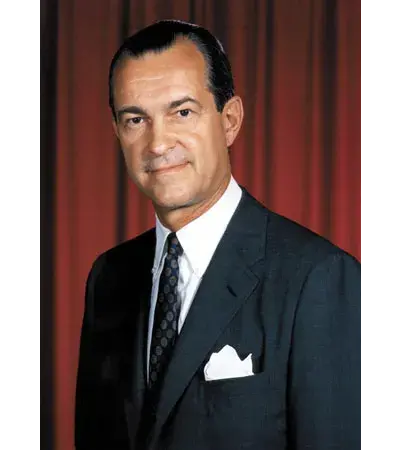
Richard McGarrah Helms was an American government official and diplomat who served as Director of Central Intelligence (DCI) from 1966 to 1973. Helms began intelligence work with the Office of Strategic Services during World War II. Following the 1947 creation of the Central Intelligence Agency (CIA) he rose in its ranks during the presidencies of Truman, Eisenhower and Kennedy. Helms then was DCI under Presidents Johnson and Nixon.
