Ron Paul Quotes
We now have an accepted practice of the President assassinating people who he thinks are bad guys. I think it’s sad.
Ronald E. Paul, U.S. Congressman (Republican, TX), Libertarian Nominee for President, Comment on the U. S. lethal Drone Strikes, Quoted in Foreign Affairs, July August 2013
Sourced by: Eigen's Political and Historical Quotations


In addition to creating many protests from the public, the Bush administration was reprimanded by the Supreme Court which stated that the detention of an American Citizen as an enemy combatant. The administration must charge and try such an American for treason, assault, conspiracy or whatever crimes the facts substantiate. The administration could not just hold a citizen without due judicial processes. They certainly could not detain a citizen and then secretly or openly execute him/her without a trial, conviction, and sentence with all appeals exhausted.


Goldsmith headed the Justice Department Office of Legal Counsel—the office that makes legal opinions to guide the Federal Government’s conduct. Goldstein had been asked to render an opinion as to whether terrorists captured in the Iraq War were protected by the Geneva Conventions. The Justice Department staff had concluded that all Iraq civilians were covered including terrorists and insurgents. He was called to meeting at the White House with the President’s and Vice President’s counsels. When Goldsmith revealed the Justice Department conclusion, Addington grew agitated and made this response. The quotation provides insight into the operations of the George W. Bush White House and its relationship with the rest of the government.

The AUMF was passed 3 days after the terrorist attack on the World Trade Center and the Pentagon on September 11, 2001.


The ‘Third Reich’ was Nazi Germany. Some scholars criticize President Reagan for disparaging and angering Al Qaeda and other Islamic organizations for no particular purpose. Others criticize him for, as this quote indicates, his not taking these organizations and their leaders seriously enough.

The President and Vice President wanted places to interrogate suspected terrorists where they did not have to obey American law, where the press could be kept away from the prisoners, and there would be no way that a prisoner could get the assistance of attorneys and American Judges could not have any jurisdiction. A number of the prisoners had been picked up by mistake, or were accused by people who had scores to settle, and if the CIA had made a mistake, the public could not find out. Further, they wanted to torture certain prisoners and wanted places where they could use their “enhanced interrogation”—see {637536}--without the public finding out.

Actually, there are many in politics who to this day castigate Truman for his decision, but for Bloomberg’s generation and before, anyone would have pushed the button. And there are some who still fault Obama as technically, the U. S. had no right to violate Pakistani airspace and kill a resident of their state without any due process in the U. S. or Pakistan. Bloomberg would have easily pushed that button, but there are many officials who warned against it, and earlier Presidents—George W. Bush and Bill Clinton who did not authorize assassinations in foreign (allies) countries.


This is always a problem in parts of the world where conflicts operate with many different parties and theater are personal grudges and scores to settle.
There was extensive hostility expressed by civilian populations in Pakistan and other countries where the United States made Drone strikes to take out terrorist leaders. However, there was much anti-American feeling in Pakistan before the Drone strikes.


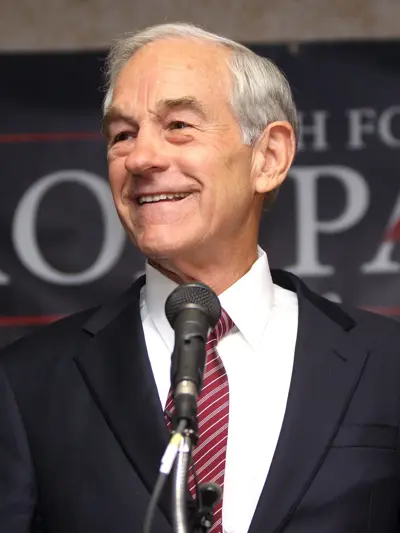
Ronald Ernest Paul is an American author, physician, and retired politician who served as the U.S. Representative for Texas's 22nd congressional district from 1976 to 1977 and again from 1979 to 1985, and for Texas's 14th congressional district from 1997 to 2013. On three occasions, he sought the presidency of the United States: as the Libertarian Party nominee in 1988 and as a candidate for the Republican Party in 2008 and 2012. A self-described constitutionalist, Paul is a critic of the federal government's fiscal policies, especially the existence of the Federal Reserve and the tax policy, as well as the military–industrial complex, the war on drugs, and the war on terror. He has also been a vocal critic of mass surveillance policies such as the USA PATRIOT Act and the NSA surveillance programs. He was the first chairman of the conservative PAC Citizens for a Sound Economy, a free-market group focused on limited government, and has been characterized as the "intellectual godfather" of the Tea Party movement, a fiscally conservative political movement that is largely against most matters of interventionism.
