J. D. B. De Bow Quotes
No white man at the South serves another as his body servant to clean his boots, wait on his table, and perform menial services in his household!”
This concept was one of the main selling points that the Southern leadership used to invest poor whites in the Confederate cause. The poor white, no matter how bad off he’s was, cold always see himself above the Negroes who were fit for being a servant while he was above that. See Jefferson Davis Quotation
J. D. B. De Bow 1860
Sourced by: Eigen's Political and Historical Quotations

This concept was one of the main selling points that the Southern leadership used to invest poor whites in the Confederate cause. The poor white, no matter how bad off he’s was, cold always see himself above the Negroes who were fit for being a servant while he was above that.

It was indeed the first government that was ever founded on that fallacious principle. In retrospect, it was amazing that more Southerners did not question why no other government in the history of the world based a society on that principle. The Southern hubris was a great failing for them.


Newsletter of the United Sons of Confederate Veterans

Prior to his diplomatic service, Dodd was one of the preeminent scholars of the country.

Incredible as it seems today, no Black person had ever dined in the White House as a guest of the President. African American servants were common. And Abraham Lincoln had received many Black visitors as had Presidents after him. But no president had ever had a Black person to dine as a social equal. The photo, reproduced here, illustrates the parity. But that was the worst thing a President could do so far as Tillman and his fellow racists were concerned. They had, since the end of the Civil war, used violence and terrorism to murder, maim and/or intimidate the Negro population to remain in an economic and socially inferior position. In Tillman’s state over these decades they had more lynchings than legal executions and there were plenty of them. Newspapers over the South riled up the whites and there was a wave of terror to be sure that the President’s importune action would not be taken as an endorsement of the Negro’s right to any equality or even dignity. This dinner essentially wedded all the Blacks to the Republican Party and all the Southern Whites to the Democratic Party. This would remain the political situation for over 60 years until the Democrats passed the LBJ Civil Rights Act in 1964 and the Republicans decided to solicit the Southern White racists who accepted the invitation and within a few years, there was a complete reversal of party loyalty of most Blacks and most Southern White Racists.


Charleston was in the Southern part of the state where most people supported slavery. Douglas made an unequivocal pitch for the racist vote {600060} and forced Lincoln to take a stand. Like many politicians today, Lincoln decided to give the audience what they wanted to hear. It is not clear whether or not he ever believed this statement or was just pandering in a political campaign. He had never said this in the Northern part of the state of before. Lincoln’s views on race changed and matured over the years, culminating in the Emancipation Proclamation. Lincoln lost the Senate seat to Douglas.


Some had organized and led lynchings; others participated, and others stood by without speaking out.


This is an important quotation because Buckley was the leading intellectual conservative of his day. And he held these racist views more than a decade after the Civil Rights Act and Voting Rights Act were passed. Buckley was an elitist with an Ivy League education, and he did believe that there was nothing inherent or permanent in the Southern Black inferiority, but there were few people of his educational level who had these racist beliefs. Not all conservatives of the time were as racist as Buckley. Even into the 21st century Conservative groups like the Tea Party had a strong but minority vestige of racism.


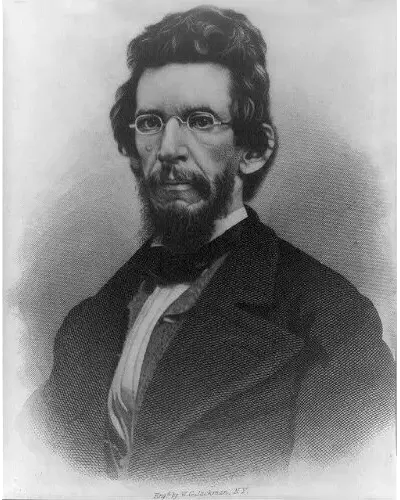
- Born: July 20, 1820
- Died: February 27, 1867
- Nationality: American
- Profession: Magizine Publisher & Statistician
James Dunwoody Brownson De Bow was an American publisher and statistician, best known for his influential magazine De Bow's Review, who also served as superindendant of the U.S. Census from 1853 to 1855. He always spelled "De Bow" as two words.
