Roger Williams Quotes
My aim is to lay bare and proclaim the crying and horrible guilt of the bloody doctrine of persecution as one of the most seditious, destructive, blasphemous, and bloodiest in any or all the nations of the world, notwithstanding the many fine veils, pretenses, and colors of not persecuting Christ Jesus, but heretics; not God's truth or servants, but blasphemers and seducers; not persecuting men for their conscience, but for sinning against their conscience; and like specious reasonings to justify the cruelty of intolerance.


Although they were a Christian sect, there was not a lot of tolerance then by the Catholic Church especially for Christians who theologically deviated slightly from official doctrine. Ironically, the Muslims who conquered Egypt and Syria were much more tolerant of the Syrian Christians than their fellow Christians were. See {634767} for his view of Islamic tolerance.

The King, a religious exremist fanatic, was a great supporter of the Inquisition whose excesses were horrible during his reign.
The Prophet Muhammad when he was the spiritual and civil leader never called for the death of anyone who insulted him. This is strictly a mania of extremist followers of Islam. However, it should be kept in mind that the Roman Catholic Church in its history murdered people for insulting the Pope or Jesus. It all stems from the Old Testament call for the execution of heretics and blasphemers.


At first this clause appears to be very enlightened and establishing freedom of conscience. This clause allowed Catholics to practice freely whereas in other colonies they could not. However, as one reads on, it becomes clear that the “tolerance” is limited to Christians only. Then if one examines the exception within the parentheses and refer to the rest of the act—see {611994}—, one finds that even Christians who have certain theological beliefs are to be put to death—those for example who deny the holiness of the Trinity such as Unitarians who were a major group in the New England Colonies. It was a significant step at the time however to protect Roman Catholics.

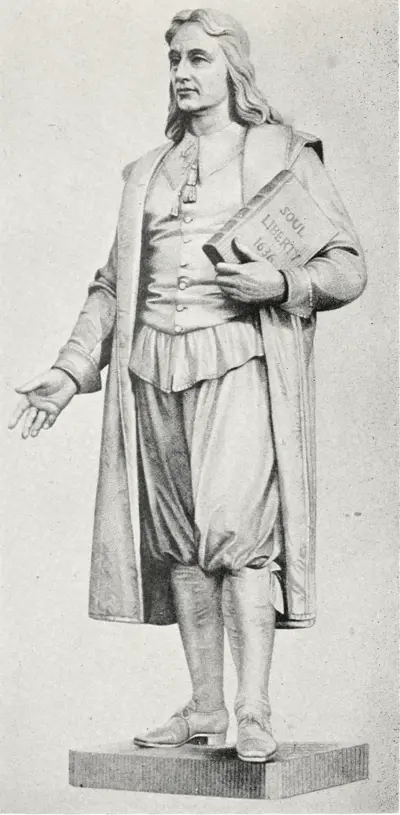
Roger Williams was a Puritan minister, theologian, and author who founded Providence Plantations, which became the Colony of Rhode Island and later the U.S. state of Rhode Island. He was a staunch advocate for religious freedom, separation of church and state, and fair dealings with Native Americans.
