Daniel O'Connell Quotes
Liberty is not worth the shedding of a single drop of blood.
He was committed to Irish freedom and independence but via politics and the law. Although he was very popular and attained much politically, there have always been Irishmen who felt violence was necessary and some who resorted to terrorism.
Daniel O'Connell, 1775-1847, Irish Nationalist Leader & Lord Mayor of Dublin, Irish Member of the British Parliament, Quoted in Jonathan Bardon, A History of Ireland
Sourced by: Eigen's Political and Historical Quotations


Ultranationalist Secret Organization. Unlike the Italian Black hand for whom it was named, the Serbs were not interested in money. The were a right wing death squad that assassinated all who opposed a single, unitary, Serbian nation. Dimitrijevic was executed in 1917.


For his seditious activities he was sentenced to penal servitude for life. He escaped and came to America where he entered politics

See Thomas Jefferson: {605051} for a somewhat similar notion.


In early America, the political parties had their own newspapers where “truth” was not an important journalistic virtue. Red scares and other fears of foreign conspiracies are as old as our nation. In 1798 the Federalists accused Vice President Thomas Jefferson, among others, of being in contact with the foreign conspirators and printed details of a "manufactured" plot to massacre the citizens of Philadelphia in one of their controlled newspapers. The nation was so alarmed that the infamous Alien and Sedition Acts were passed by Congress a few months later. These were probably the greatest infringements on American civil liberties in our history.

He was in a Turkish Prison when he made this statement. Some of his more militant PKK followers rejected the statement assuming that it was coerced. Most agreed and were tired of a fight against an overwhelmg Turhish military and police. However the PKK militsntd, devclsred terrorists by the US and many other nations, killed 40,000 Turks including many Kurds who are and have been an ethnic minority in Turkey who have been treated very badly..


In most revolutionary settings leaders have to persuade people who have voted with no success to turn to the rifle. In Ireland at this point, almost all the nationalsits knew that the rifle would help them but they were not sure that a vote would have the effect of a bullet.


There is an close similarity between the Dutch revolutionary statements and that of the Founding Fathers of America. The Dutch rebels were very well aware of the American Revolution and the subsequent establishment of a republic, and emulated much of the American experience. They were the first foreign people to be inspired by the American Revolution. Many followed.

South America, invaded and colonized by Spain was a brutal combination of slavery and repression. Even the European colonists suffered under the terrible combination of exploitation, militarism and religious dictatorship. Independence from Spain was equally bloody as unlike in North America where the fight was against British rule, in South America the black slaves, the indigenous Indians and the white colonists all had scores to settle with the Spanish rulers. And the Spanish in turn realized that and brutally repressed all rebellion attempts. Atrocities were common, and committed by almost all, including even idealists like Bolivar.

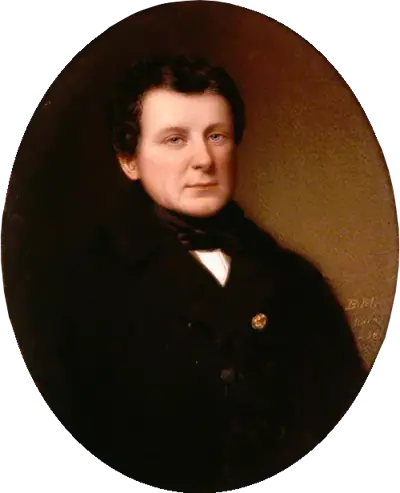
Daniel O'Connell, hailed in his time as The Liberator, was the acknowledged political leader of Ireland's Roman Catholic majority in the first half of the 19th century. His mobilisation of Catholic Ireland through to the poorest class of tenant farmer helped secure Catholic emancipation in 1829 and allowed him to take a seat in the United Kingdom Parliament to which he had twice been elected. At Westminster O'Connell championed liberal and reform causes (he was renowned internationally as an abolitionist) but failed in his declared objective for Ireland: the restoration of a separate Irish Parliament through repeal of the 1800 Acts of Union. Against the background of a growing agrarian crisis and, in his final years, of the Great Irish Famine, O'Connell contended with dissension at home. Criticism of his political compromises and system of patronage led to a split in the national movement he had singularly led.
