Eisaku Sato Quotes
Japan is the only country in the world to have suffered the ravages of atomic bombing. That experience left an indelible mark on the hearts of our people, making them passionately determined to renounce all wars.
Sato, Eisaku. "The Pursuit of Peace and Japan in the Nuclear Age." Nobel Lectures, Peace 1971-1980, edited by Tore Frängsmyr, World Scientific Publishing Co., 1997.


Although generally a right wing conservative, Clark today sounds like almost like an extreme leftist on the issue. At the time however, many thought that he had taken leave of his senses. He not only was completely contrary to bipartisan national policy but opposed by almost universal American public opinion. He is one of the very few significant American officials to oppose the war policies.


The only soldier ever so honored


While this sounds like an idiotic statement, at the time very little was known by anyone about the effects of large doses of radiation. Groves had not then the benefit of the medical reports or interviews about the Japanese who had received high doses of radiation from the 2 atomic bomb attacks.

The second atomic bomb had just been dropped.

This was the order for the dropping of the first Atomic bomb on Hiroshima.

After the Hiroshima bomb there was still no surrender by the Japanese. The decision was made to drop the second bomb on Nagasaki.

Truman had just told Stalin about the new technology. Stalin had actually already known something about it as the result of Soviet espionage in the United States.

On March 9-10, 1945, over three hundred B-29 Superfortresses, loaded with 2,000 tons of incendiary bombs flew over Tokyo bombing the city in waves for 6 hours. Over 250,000 buildings were destroyed and more people killed than would be in either Hiroshima or Nagasaki which were destroyed by atomic bombs. The fact that the Japanese would not surrender even after such complete destruction of their capital and largest industrial city, was used by American leaders in assessing whether to use the atomic bomb afterwards. There were many who believed that the atomic bomb would not be enough for motivate a Japanese surrender as Japanese culture prohibited surrender. Indeed, even after the 1st atomoc bomb, the Japanese did not surrender, and after the 2nd, the war council was split 3-3 and the Emperor historically broke the tie. Even the atomic bomb might not have worked. Later generations found this resistance to surrender hard to understand but Japanese culture was amazingly strong then.


A few Americans who were too young to remember WWII hav in retrospect questioned the use of the Atomic Bomb against Japan. Young Japanese feel even stronger on this point. This quotation is very important because it comes for a senior Japanese official who knew the conditions at the time.

Bethe and other European refugees joined American and British scientists at Los Alamos, NM, for the development of the atomic bomb.

There were some doubts the scientists developed after Germany had surrendered as Hitler had been their greatest fear. So they were briefed on the planned invasion of the Japanese mainland and the military medical preparations for treating and caring for ½ million serious wounded casualties. In addition, given the state of war, there was expected about the same number of American Military deaths. On top of that, there would be many more Japanese military casualties plus even more Japanese civilian deaths and wounded. The use of the Atom Bomb would save all those lives but have casualties of its own, but far fewer. At the time, surprising to most people now, the use of the atomic bomb was not an issue of controversy at all. There were no Congressman who questioned it, no newspapers which editorialized against the use of the bomb. There were not even any other counties which protested its use.


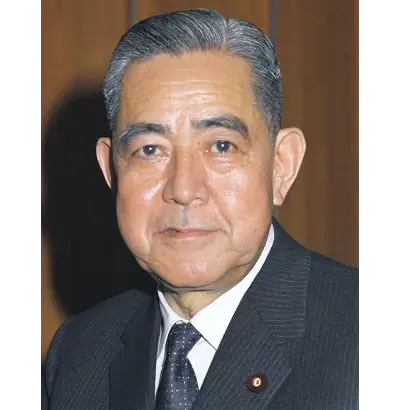
Eisaku Satō was a Japanese politician who served as Prime Minister of Japan from 1964 to 1972. He is the third-longest serving Prime Minister, and ranks second in longest uninterrupted service as Prime Minister.
