Salam Fayyad Quotes
It's the responsibility of men of religion to ... present religion as a way of tolerance, not as a cover for bloodshed.
This is a particularly noteworthy quotation as Muslims are often accused of intolerance and here is a Muslim who argues that it is the responsibility of religious leaders to present religion in a tolerant manner.
Salam Fayyad, Physician & Prime Minister of the Palestinian National Authority, Fayyad Warns Islamic Preachers, Forbes
Sourced by: Eigen's Political and Historical Quotations


Head of the Sikh Religion. His teaching was that deeds determined the man, not the professed belief and that the existing religions turned man against man.

This quotation illustrates that a narrow orthodox view of Islam is not the only one in Arab nations. Khaled is not an obscure cleric, but a popular television personality. While his views are considered heresy by many orthodox Muslims, the narrow view is by no means universal. Orthodox Islamists believe that God has commanded that all mankind be Muslims and the ones who are not are either ignorant so need to be “educated”, or evil and therefore should be killed. However, Muhammad ordained that an exception should be made for “Children of the Book”—Jews and Christians who revere the Old Testament. This was at a time when Christians would not allow any other form of worship but Christianity. Christianity, Judaism and most other religions have become tolerant of other religions and allow open alternative worship. Islam which early on led the way to tolerance, has in many countries gone back to the intolerance that existed amongst many Christians at the time of Muhammad.


She is a leading American Arab who is a Syrian expatriate.

With the partition of India forming an independent Pakistan, ethnic riots broke out and millions of people were killed. This joint statement was issued to try and quell the violence but it had progressed too far. Jinnah as a political ploy to obtain the partition organized Muslims and threatened violence—see {627153} and {627169}. Things got out of hand with ethnic cleansing being an objective in many localities—see {627146} and {627149}.


Historically, when Christian Europe was torturing and butchering people over differences of religious opinion, Islam was for the time, in most places, a model of tolerance. Suhrawardy died before Islam degenerated into an intolerance that almost rivaled in brutality that of the Christians centuries ago. And while his statement about the invention and initiation of brutal intolerance is correct, he would be shocked at the behavior of 21st century Iran, Pakistan and some other Islamic nations who from a traditional Islamic perspective had degenerated.
Muslim clerics throughout the world had been relatively mild in their criticism of Islamic Extremists and Terrorists. Delic was one of those who urged stronger moral statements. Many of the Muslim clerics in the world actually were themselves holders of Wahhabi and other extremist views. However, many also opposed terrorism and felt that there was nothing in Islam that could justify the indiscriminate killing. However, a number of these were intimidated lest an extremist Muslim cleric issue a Fatwa calling for his death for heresy. Most of us did not then, and even today, do no really understand the extent and frequency of these threats in the Muslim world (and even in the West) and the very frequent assassination or serious wounding of those Muslims who publicly criticize the extremist terrorists. Delic had much more courage than most.


Muslims had engaged in violent demonstrations to insist on more Sharia law and the curtailment of behavior that the Muslim Mullahs determined to be contrary to Sharia and Islam. In Nigeria Muslim violence and intimidation had at the time already caused one of the Nigerian states to adopt Sharia instead of civil law. Many Muslims continued the violence in order to spread the adoption of Islamic law. In most counties, there were threats of law enforcement crackdowns to curtail the Muslim violence and attacks on Christians and other religions. In Nigeria however, the Christians under Akinola’s leadership made this not so subtle veiled threat to retaliate. It seems to have worked in the short run although the religious tensions remained very high and no one knew whether or not religious violence or even war would break out.


In one of the historical ironies of the 12th century, a Christian sect preferred the rule of the Muslims than their Christian brethren—on the grounds of religious tolerance. It illustrates the changes that take place over time. By the 21st century, it was the Christians who were thought of as tolerant and the Muslims as the opposite.


While not in the Koran, this attributed statement is the basis for the ban on non-Muslims going on a Hajj and going to the most holy Muslim places—Mecca, Mina, Muzdalifa, and Arafat as well as the anti-religious hostility to all religions but Islam which is present in some Muslim countries.
Despite the fact that the statues were holy symbols to Buddhists, they were offensive to Muslims who say statues as “graven images” prohibited by the Koran. See Wakil Ahmad Muttawakil {608419} and Jamal’s other quotation {604665}.

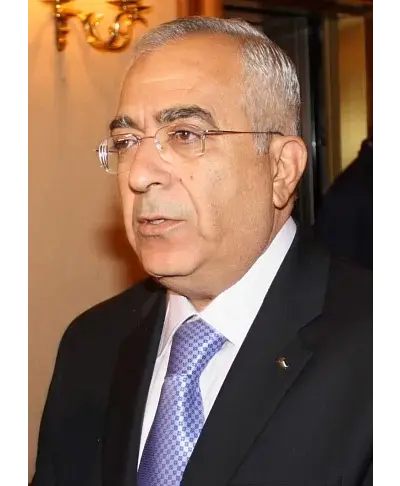
Salam Fayyad is a Jordanian-Palestinian politician and former Prime Minister of the Palestinian Authority and Finance Minister.
