Nigel Lawson Quotes
It would be wholly wrong constitutionally for the unelected House of Lords to do anything, to kill anything of a financial nature that has been through the House of Commons not once but twice.
Lawson, Nigel. Parliamentary Debates (Hansard), House of Lords, 26 Oct. 2015, vol. 765.


In the English system the checks and balances of the American system are not present. Historically in England the Monarch and the Parliament acted as checks upon each other. With a Constitutional Monarch there is no institutional check on Parliament. The checks are their restraint--respect for precedent--and the voters. The Prime Minister is a member of Parliament and has no powers other than what Parliament gives him/her. The courts in England are under Parliament and the upper house, the House of Lords is the equivalent of the highest court—but it may always be overruled by the parliament itself.


In 1949 the NATO treaty was signed. There was concern that a phrase in the treaty authorizing signatories to take "such action as it deems necessary, including the use of armed force" would undermine Congress's powers:


Originally published as The Cynic’s Word Book


Two years later with bipartisan support Speaker Joseph Cannon was stripped of his party and the Rules Committee was created.


Soon after Jackson's reelection, delegates from South Carolina, led by John C. Calhoun, moved quickly to declare "null, void, and no law" the Tariff Act of 1832. The president's reaction to the Ordinance of Nullification was swift.


This is the earliest surviving attempt of the Romans to formulate a legal code.

This clause was a throwback to the days before the separation of powers where the legislature could imprison anyone they thought contemptuous or interfering with their deliberation. Contrast this with the earlier constitution of Massachusetts which forbade the legislature from acting as a judge or prosecutor. See {616750} and {616749}. Also this was a clear invasion of freedom of the press and freedom of speech provided by the Bill of Rights. However, at the time, it was not clear that the Federal Constitution was binding on State Governments on State Matters. Modern law is still ambiguous on this general point, but not on freedom of speech and the press which is currently definitely binding on the states.
This Cahier was the consensus of the Clergy of Blois in 1789. There were cahiers of several provinces of France—some by the clergy, some by the nobles. What is fascinating is the emergence of many of the pre-revolutionary French concepts. The example of the American revolution and its principles was known throughout the educated classes of France.
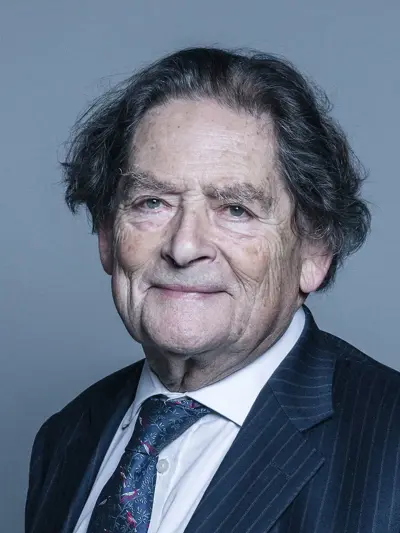
Nigel Lawson, Baron Lawson of Blaby, PC is a British Conservative politician and journalist. He was a Member of Parliament representing the constituency of Blaby from 1974 to 1992, and served in the cabinet of Margaret Thatcher from 1981 to 1989. Prior to entering the Cabinet, he served as the Financial Secretary to the Treasury from May 1979 until his promotion to Secretary of State for Energy. He was appointed as Chancellor of the Exchequer in June 1983, and served until his resignation in October 1989. In both Cabinet posts, Lawson was a key proponent of Thatcher's policies of privatisation of several key industries. Lawson oversaw the sudden deregulation of financial markets in 1986, commonly referred to as the 'Big Bang', which decisively strengthened London's place as a financial capital.
