Ambrose Bierce Quotes
Senate: A body of elderly gentlemen charge with high duties and misdemeanors.
Originally published as The Cynic’s Word Book
Ambrose Bierce, 1842-1914?, Journalist & Political Columnist, The Devil's Dictionary 1906
Sourced by: Eigen's Political and Historical Quotations


His main reason for believing this is that all appropriations bills must be initiated by the House of Representatives. Lobbyists therefore often give the House more attention than the Senate.


The Senate had always been more deliberative than the House, but at the time Alexander made this statement, his party—the minority in the Senate—had filibustered most of all the legislation, There were more filibusters than had occurred in the entire pure history of America.

This was the President’s original role regarding legislation. However, in the 20th century, Presidents have become more active and suggest laws and often initiate the process and then end it by signing the law that he suggested and shepherded through the Congress. But this was never the vision of the Founding Fathers, but since it is not addressed in the Constitution is not an unconstitutional process.
Note that early constitutional experts assumed that one of the President’s roles was to be non partisan and control partisanship. Note the phrase ‘prevent the artifices of party’. The early founders were very wary of political parties of ‘factions’ as Madison called them. However, most were extremely partisan although in the Presidency partisanship was toned down by George Washington but after him, partisan ship became the norm.

At the time the power and prestige of Congress relative to the Presidency , was much greater than it is today. It was McKinley’s successor, Theodore Roosevelt, who began a 20th century trend which led to a reversal of the relationship between the Executive Branch and the Legislative.


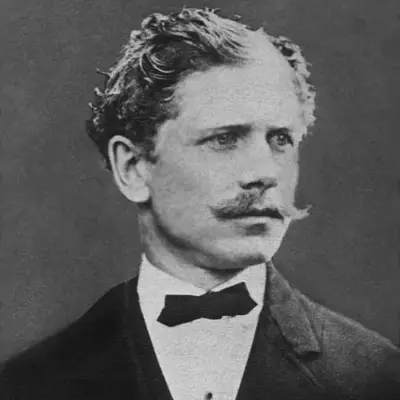
Ambrose Gwinnett Bierce was an American short story writer, journalist, poet, and Civil War veteran. His book The Devil's Dictionary was named as one of "The 100 Greatest Masterpieces of American Literature" by the American Revolution Bicentennial Administration. His story "An Occurrence at Owl Creek Bridge" has been described as "one of the most famous and frequently anthologized stories in American literature"; and his book Tales of Soldiers and Civilians (also published as In the Midst of Life) was named by the Grolier Club as one of the 100 most influential American books printed before 1900.
