Trent Franks Quotes
The Constitution gives the Congress absolute authority within the District of Columbia on any legislative issues whatsoever.
United States, Congress, House. Representative Trent Franks speaking on H.R. 3803. Congressional Record, U.S. Government Publishing Office, 31 Jul. 2012, p. H5512.


In 1949 the NATO treaty was signed. There was concern that a phrase in the treaty authorizing signatories to take "such action as it deems necessary, including the use of armed force" would undermine Congress's powers:


This is a classic type of fallacious political logic. The author claims that there are no powers in the constitution to make laws in a number of important areas of our society. What is true, is that there is no explicitly and uniquely specified statements in the Constitution regarding the areas he specified (and some he didn’t like education). However the power to make laws in these areas comes from the “Commerce Clause” where the Federal Government was given the power to regulate Interstate Commerce. And that is what the Federal Government does make laws about. Food that is sold in the state where it is grown is regulated by the states. But interstate agriculture is. Medicines and weapons are also sold and transported in interstate commerce. Even housing is in part covered as financing and mortgages, building materials, working conditions of the building companies are part of Interstate Commerce. A succession of Congresses have recognized this and so has every Supreme Court in our history. McManus however believes that all these legislators and judges have been wrong and worse, part of a conspiracy to subvert the Constitution. See {630683} for his tendency to see conspiracies in politics.


Vidal, a staunch liberal held this view along with many ultra conservatives end extreme liberals. The constitution requires the Congress to declare war, but they have not done so for any of the wars since WWII. The President assumed the war power. And the only coherent budgets began.

In the English system the checks and balances of the American system are not present. Historically in England the Monarch and the Parliament acted as checks upon each other. With a Constitutional Monarch there is no institutional check on Parliament. The checks are their restraint--respect for precedent--and the voters. The Prime Minister is a member of Parliament and has no powers other than what Parliament gives him/her. The courts in England are under Parliament and the upper house, the House of Lords is the equivalent of the highest court—but it may always be overruled by the parliament itself.

President John Adams Alien and Sedition Acts were amongst the worst laws ever passed in America. It totally violated the First Amendment but at the time the Supreme Court had not ruled on the laws which prohibited criticizing the government. Ironically, it was Adams’s son, John Quincy Adams who finally led the repeal effort.


There are many methods of voting in a legislative body. “Viva Voce” is Latin for “by Voice” and is often called a “Voice Vote”. Voting by ballot takes longer but had the advantage or disadvantage of secrecy. The theory was that if the New York Legislators could vote in a secret ballot, the lobbies and special interests would not be as influential since they would never know for sure—unless there were a unanimous vote—how any particular legislator voted. A further advantage is that Party Discipline could not be imposed and parties or “factions” as they were then called would be less powerful—a great concern of all the patriots who tended to distrust parties. The disadvantage was that the people who elected the legislator would never know how he voted. Note the frank admission that this was an “experiment”. Americans of the era realized that almost everything they were doing was a political experiment and this introduced a pragmatic force into structure and procedures of American politics.


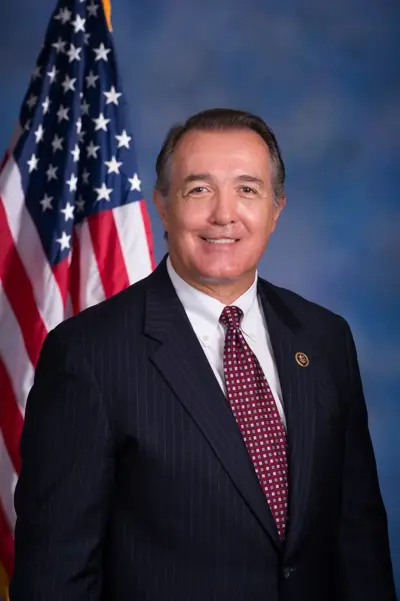
Trent Franks is a former American politician and businessman who served as the U.S. Representative for Arizona's 8th congressional district from 2003 to 2017 (numbered as the 2nd district from 2003 to 2013). He is a member of the Republican Party. Congressman Franks served on the Judiciary and Armed Services Committees and was Vice Chairman of the Strategic (Nuclear) Forces Subcommittee, and Chairman of the House Subcommittee on the U.S. Constitution.
