Lady Gregory Quotes
It was on the first day of Beltaine, that is called now May Day, the Tuatha de Danaan came, and it was to the north-west of Connacht they landed. But the Firbolgs, the Men of the Bag, that were in Ireland before them, and that had come from the South, saw nothing but a mist, and it lying on the hills.
Lady Gregory. Gods and Fighting Men: The Story of the Tuatha de Danaan and of the Fianna of Ireland. John Murray, 1904, p. 2.


Sherman, one of the most gifted generals of the Civil War. He hated the cruelty of war and the Civil War in particular as he had specifically warned his Southern friends ahead of time about what war would bring. See {585882}. Sherman was one of the first American military men to look at war without any of the romantic, patriotic, noble attributes that most others did.


Many historians argue that at this point the Confederacy was beaten and had they then surrendered everyone would have been much better off. But Davis and other Southern leaders, with their ideological and twisted moral logic dragged the war on for two more years and much of the South was destroyed making things even harder for the Southerners during Reconstruction.
This concept of Total War turns out to be the only way to bring many conflicts to an end. Sherman was hated by generations of Southerners because he appeared to be vengeful to humble the Southern pride and spirit. But actually, Sherman was not personally vengeful at all and respected the South and understood its point of view more than most in the North. However, he was one of the first of the Western World’s military leaders to realize that with modern warfare and the then modern weapons, the only way to win a war was to persuade the enemy to stop fighting and if they refused, as the South kept doing, the only rational and humane course was to end the war as swiftly and totally as possible.

Secession of the South was not a new idea stimulated by the election of Abraham Lincoln. Fully 10 years before, there was this plan to form a Slave state union which would expand into Mexico and the Caribbean.


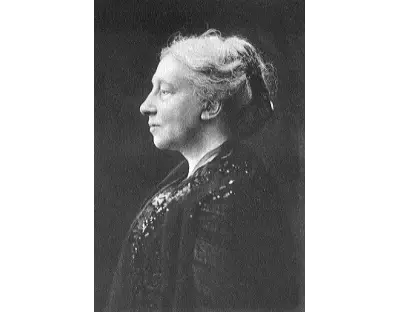
Isabella Augusta, Lady Gregory was an Irish dramatist, folklorist and theatre manager. With William Butler Yeats and Edward Martyn, she co-founded the Irish Literary Theatre and the Abbey Theatre, and wrote numerous short works for both companies. Lady Gregory produced a number of books of retellings of stories taken from Irish mythology. Born into a class that identified closely with British rule, she turned against it. Her conversion to cultural nationalism, as evidenced by her writings, was emblematic of many of the political struggles to occur in Ireland during her lifetime.
