Dwight D. Eisenhower Quotes
It is not enough just to take this weapon [nuclear bombs] out of the hands of the soldiers. It must be put into the hands of those who will know how to strip its military casing and adapt it to the arts of peace.
Dwight D. Eisenhower, 1890-1969, 34th President of the United States (Republican, KS), Supreme Allied Commander in Europe, Speech, U. N. General Assembly, December 8, 1953
Sourced by: Eigen's Political and Historical Quotations


Under this initiative the US declassified and distributed technical, previously secret information, about atomic science to the world for scientific development. It has been very successful and there are few modern nations that have not benefitted from the program.


The President had asked for the views of the Joint Chief’s of Staff. At the time, the major U. S. defense doctrine depended on our nuclear deterrent which if used against the Russians would have meant mutually assured destruction since they had enough of a nuclear arsenal to destroy America as we know it.


There was no problem with Iran having nuclear power. However, they wanted to utilize a process with which fuel for nuclear bombs could be made. Russia had offered to provide them with nuclear fuel for any power plant that they might want to create, but Iran refused insisting that they had a right to enrich their own uranium. Then they lied to the inspectors for the United Nations Atomic Energy Commission. They had threatened to “wipe Israel off the map” and the major Arab nations in the area secretly asked the United States to prevent Iran getting nuclear weapons even if force had to be used. Economic sanctions were tried first.


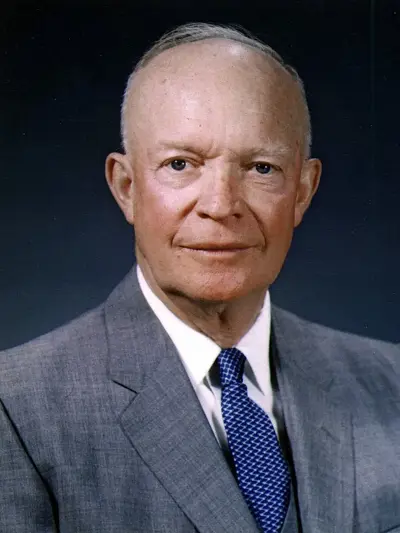
Dwight David "Ike" Eisenhower GCB OM GCS CCLH KC NPk was an American military officer and statesman who served as the 34th president of the United States from 1953 to 1961. During World War II, he became a five-star general in the Army and served as Supreme Commander of the Allied Expeditionary Force in Europe. He was responsible for planning and supervising the invasion of North Africa in Operation Torch in 1942–43 and the successful invasion of Normandy in 1944–45 from the Western Front.
