John F. Kennedy Quotes
It is increasingly clear that no matter what party is in power, so long as our national security needs keep rising, an economy hampered by restrictive tax rates will never produce enough jobs or enough profits.
Kennedy, John F. "Address and Question and Answer Period at the Economic Club of New York," December 14, 1962. Public Papers of the Presidents of the United States: John F. Kennedy, 1962. Washington, D.C.: United States Government Printing Office, 1963, p. 879.

Kennedy, with great Republican support proposed a reduction of the top income tax rate from 91% to 65%, reduction of the bottom rate from 20% to 14%, and a reduction in the corporate tax rate from 52% to 47%. That put the tax rates at the appropriate level. Economic growth was reasonable until President Reagan’s military spending cold war strategy produced huge deficits, Clinton raised the tax rates slightly and had the best economic growth ever, and had a balanced budget. George W. Bush lowered taxes had much slower growth and even larger deficits. However, by 2013 all hints of bipartisanship were gone. The Republicans claimed that the then tax rates were much too high—the highest income tax was half the rate that most agreed in 1962 was the right rate. And the corporate tax was 35 %, far lower than the Kennedy rate of 47% and incredibly lower when we consider that with deductions that were then in force the average corporate tax was only 12% the lowest since the Great Depression. Meanwhile the 2008 Bush Economic Meltdown and the Great Recession it produced the highest deficits in history with the lowest taxes in modern times and much of the polarized population demanding further tax cuts and an equal number demanding increased tax revenue.


This surprising quotation, along with others a far from main steam American views (See {623830} ) assured her election defeat.

The big priorities will focus on the security and economic side because they really go hand in hand.
This quotation Illustrates a conflation of American national security and economics.

Foreign trade creates jobs and eliminates jobs. The people who lost jobs as the result of increased foreign trade are readily identified while the job beneficiaries may never know the reason. So it is a hard political sell even though most of the economic studies have showed that more jobs of more value are created by trade than lost. However, the losers are generally blue collar workers while the beneficiaries are generally white collar and knowledge workers. So there is a socioeconomic class differentiation in the trade issue.


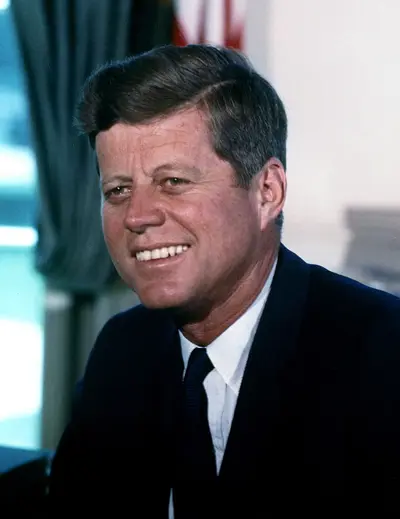
John Fitzgerald Kennedy, often referred to by his initials JFK, was an American politician who served as the 35th president of the United States from 1961 until his assassination in 1963. Kennedy served at the height of the Cold War, and the majority of his work as president concerned relations with the Soviet Union and Cuba. A Democrat, Kennedy represented Massachusetts in both houses of the U.S. Congress prior to becoming president.
