Samuel Shaw Quotes
It is happy for America that she has a patriot army, and equally so that a Washington is its leader. I rejoice in the opportunities I have had of seeing this great man in a variety of situations; — calm and intrepid where the battle raged, patient and persevering under the pressure of misfortune, moderate and possessing himself in the full career of victory. Great as these qualifications deservedly render him, he never appeared to me more truly so, than at the assembly we have been speaking of. On other occasions he has been supported by the exertions of an army and the countenance of his friends; but in this he stood single and alone.
Samuel Shaw, 1754-1794, Revolutionary War Soldier, First U. S. Counsul to China, Letter to Reverend Eliot, April 1783
Sourced by: Eigen's Political and Historical Quotations


He was announcing the fall of France, and the start of the Battle of Britain. And that was their finest hour.


He drove the British into the sea when no one expected that outcome.

Attila the Hun. The Romans aided by Theodoric, King of the Visigoths, fought the Huns in the only battle that Attila ever lost which he lost badly. There were 165,000 men killed in an afternoon. The Roman General, Flavius Aetius, had been a boyhood friend of Attila’s and had fought with him against the Visigoths. The Romans had Attila trapped but his old friend let him escape with just a good thrashing to his ego and army as to not upset the balance of power and tilt it in favor of the Goths. Roman foreign policy at the time was to keep all the Barbarians strong enough to fight one another so that none would be dominant but all weaker than Rome. Divide and conquer.

An example of this was the landing in the beaches of Normandy in WWII. Once on the beaches the allied troops had to win or die. Some of the most heroic fighting in American and English military history occurred on those beaches. Another was the Spanish Explorer Hernando Cortez who after landing in the New World, had his ships burned so that he and his soldiers had to conquer or they would die.

That is the way he was killed. The phrase, “We are bound to believe that, anyhow” indicates that Stuart really realized how futile the Southern war effort would be but loyalty and patriotism required him to suspend his rational belief structure.


Today, most Americans know little of Samuel Adams but see John Adams as a much larger and more important figure. But for the American Patriots fighting the Revolution, it was Sam Adams who made the most outstanding contributions to the political strategy and leadership.


Ataturk was a young major at the time commanding troops of a weak and corrupt Ottoman regime. However a combined English and French (the strongest military powers in Europe) invasion of the Gallipoli Peninsula threatened to capture the Turkish capital, Constantinople. Ataturk alone rallied the Turkish defenders and fought the invaders to a standoff in long drawn out battle with huge casualties on both sides. Ataturk became a national hero. Although Ataturk thereafter was very reluctant to use military force or endanger troops, the thing he always thought worth the supreme sacrifice (including his own) was the independence and sovereignty of the nation. See {584502} for his continuing belief in this type of sacrifice.


As in almost every war, there were disagreements between the Confederate Generals and the civilian authorities. See {633934} for another Civil War Southern example.


The General refused. He had already achieved a strategic victory and it was only a matter of time when the Dutch would withdraw on their own as their supply lines were cut off and the populations wanted them out.


During the American Revolution, conditions were very difficult for Washington’s soldiers who were ill armed, ill clothed, and ill fed while they were paid irregularly. At one point morale was so low that some of the soldiers revolted. Smyth observes that Washington and Congress disciplined the mutineers very mildly, especially when compared with the way the British would deal with such things. The British Governor Clinton tried to take advantage of the mutiny and the poor morale by announcing that all of Washington’s troops who wished could obtain amnesty and join the British forces where the pay and conditions were much better. Professor Smyth found it fascinating that none of the Americans would join the British and he credits it to the wise and mild discipline policies of Washington and Congress as well as the general perception of the justice of the American cause among the American troops.
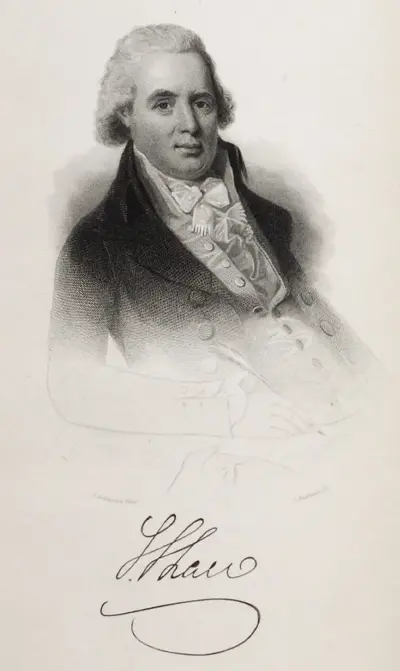
Samuel Shaw was an American Revolutionary War army officer and diplomat, who served as the first United States consul to China.
