John Armstrong Jr. Quotes
Is it rather a country that tramples upon your rights, disdains your cries and insults your distresses? Have you not, more than once, suggested your wishes, and made known your wants to Congress? Wants and wishes which gratitude and policy should have anticipated, rather than evaded. And have you not lately, in the meek language of entreating memorials, begged from their justice, what you would no longer expect from their favour? How have you been answered? Let the letter which you are called to consider tomorrow make reply. If this, then, be your treatment, while the swords you wear are necessary for the defense of America, what have you to expect from peace, when your voice shall sink, and your strength dissipate by division? When those very swords, the instruments and companions of your glory, shall be taken from your sides, and no remaining mark of military distinction left but your wants, infirmities and scars? Can you then consent to be the only sufferers by this revolution, and retiring from the field, grow old in poverty, wretchedness and contempt? Can you consent to wade through the vile mire of dependency, and owe the miserable remnant of that life to charity, which has hitherto been spent in honor?
The Continental Congress had treated the army poorly throughout the war with few provisions, erratic pay, and little understanding of the reality of the war effort. He addressed the senior officers of the army urging that the army not disband as Congress had ordered until there was some assurance that they should be reasonably treated and that they would not become public charges. Many had lost everything they owned, not being able to tend their farms or businesses; others were wounded and permanently handicapped. The officers did not follow Armstrong and instead followed the lead of George Washington and returned to civilian life in good faith, but as Armstrong had predicted, Congress did little to compensate the army. Despite his urging disobedience to Congress, once the Constitution was ratified and the government became more stable, Armstrong received several major Presidential appointments and was confirmed by the Senate which he had so castigated.
John Armstrong Jr., 1758-1843, Revolutionary War Military Officer, U. S. Minister to France, U. S. Secretary of War, U. S. Senator (NY), The Newburgh Address To the Officers of the Army, March 1783
Sourced by: Eigen's Political and Historical Quotations

After the American Revolution one of the great fears of many of the political leaders was a standing army. So there was little concern about the morale of the officers and enlisted men. Further, the national government and the governments of the individual states were broke. Washington and Hamilton wanted the soldiers to be paid their back wages and saw this as the highest priority for the new nation. Most others did not agree, and viewed the new military back wages as equal to the many other obligations. Hamilton, saw this as an active hostility to the military and was very overt about his castigation of Congress. Washington agreed but was far more diplomatic and could never accept the fact that the military did not owe loyalty to the nation and the Congress.

This is a very important quotation because it and {641523} show the great difficulty that Washington was under and the fact that he repeatedly asked Congress for assistance very little of which was provided.

Mechanics was a general term for people who made things, or fixed things. Ramsay was the first major historian of the American Revolution.

Montgomery was killed later that year commanding the failed attempt to capture Montreal in Canada

Those Americans who were on the British side of the Revolution often looked with disdain on the revolutionaries ham handed early attempts to operate a government. The Continental Congress was particularly weak. George Washington and the American military leaders were constantly complaining about the inept Congress but the Loyalists write satires like this and made fun of them. This was the equivalent of today’s television late night comedians.


His advice was not taken. The result was as Franklin predicted.

During the American Revolution, conditions were very difficult for Washington’s soldiers who were ill armed, ill clothed, and ill fed while they were paid irregularly. At one point morale was so low that some of the soldiers revolted. Smyth observes that Washington and Congress disciplined the mutineers very mildly, especially when compared with the way the British would deal with such things. The British Governor Clinton tried to take advantage of the mutiny and the poor morale by announcing that all of Washington’s troops who wished could obtain amnesty and join the British forces where the pay and conditions were much better. Professor Smyth found it fascinating that none of the Americans would join the British and he credits it to the wise and mild discipline policies of Washington and Congress as well as the general perception of the justice of the American cause among the American troops.
This is a very important quotation because it and {641522} show the great difficulty that Washington was under and the fact that he repeatedly asked Congress for assistance very little of which was provided. Washington began to be disillusioned about the militias at this time; see {641525} for the conclusions he reached about the state militias.
This is a very interesting quotation. A contemporary historian tells us how rapidly the American colonists organized when Parliament passed the Tea Tax. Even with the Internet and social media it would be hard to organize representation from 13 states that fast today. The word of mouth and mail of the day was surprising to most of us. The passion on the issue and the public interest must have been extraordinary. Ramsay was the first major historian of the American Revolution.

There is frequently a disagreement between the military and civilian leaders just as there are disagreements among most political personnel. Hawks, and people who have had experience in the military tend to think that military advice on military matters should be determinative with the President and Congress. Others tend to believe that military advice should be considered, but if it were always adhered to, there would be no point in having civilian control over the military. See {639667} for an example of when military leadership advice prevailed and it was a mistake.

Today, most Americans know little of Samuel Adams but see John Adams as a much larger and more important figure. But for the American Patriots fighting the Revolution, it was Sam Adams who made the most outstanding contributions to the political strategy and leadership.


Fox was one of the opposition leaders who were opposed to the heavy handed policies that the British King and Government had used.
The simplistic view that the American colonists were patriots and the British were the colonizers against whom the colonists revolted is not really accurate. The American colonists were polarized into patriots and loyalists. The Loyalist Americans ranged from many of those merchants whose business depended upon England, those whose family were still in England, those whose religion made them loyal to the Church of England, slaves who would be free under British law, Americans who had strong cultural and intellectual ties to England and those Americans who were great believers in monarchy and whose honor required that they fulfill the oath that they had taken to the King of England. Some of the worst atrocities of the American Revolution occurred in the battles of these Americans against each other. See {82105} for more on this point.
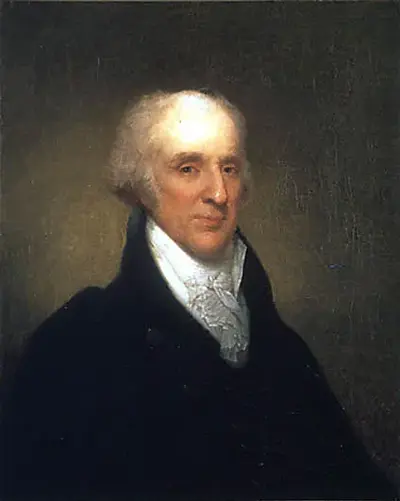
John Armstrong Jr. was an American soldier and statesman who was a delegate to the Continental Congress, U.S. Senator from New York, and Secretary of War.
