Garry Wills Quotes
Oliver Cromwell (1599-1658) moved from a legitimate to a charismatic role, reversing the course followed by Washington. Yet therewere surface similarities in their careers. Both led military rebellions against English monarchs--Cromwell against Charles I, Washington against George III. Each took local militia--the "train bands" of Cromwell, the colonial levies of Washington--and forged professional armies on a national scale. Each infused a new ethos in his troops--a religious spirit in Cromwell's case, a post-colonial American identity in Washington's.
Wills, Garry. Certain Trumpets: The Call of Leaders. Simon & Schuster, 1994.


He was not a very good agent in the sense of making accurate reports. At the time this was an unrealistically positive assessment, but it is likely that he was provided with “American propaganda”. France would only assist America if they thought that the Americans had a good chance, and the American diplomats’ propaganda efforts were successful in exaggerating the size of the army, the morale, the provisioning, and the pay.


We are so accustomed to thinking about George Washington as a great military leader that it is surprising to see contemporary comparisons where Washington was found wanting or second. Actually Horatio Gates was a brilliant tactical general and a great leader of men—many think far better than Washington, but the genius of Washington was his strategic and political grasp of the situation. Essentially, with exceptions like the Battle of Trenton, Washington lost almost all the battles he fought as a tactical general. He realized early on that he did not have to win battles; he just had to prevent losing them so badly that he could not continue the fight. The insurgent wins as long as he can still fight. The British could not win unless they eliminated the ability of the revolutionists to fight. But Washington won the last battle at Yorktown, and that is the one that counted. Rush ran the hospitals for the Revolutionary Army and talked to many officers and enlisted men, and also observed much of the British military practices.


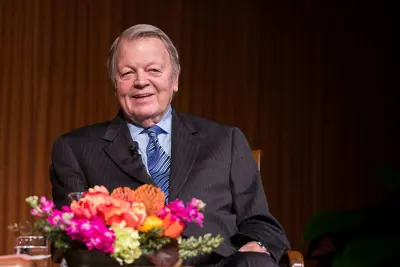
Garry Wills is an American author, journalist, and historian, specializing in American history, politics, and religion, especially the history of the Catholic Church. He won a Pulitzer Prize for General Non-Fiction in 1993.
