Abraham Clark Quotes
While General Howe with a Large Armament is advancing towards New York, our Congress resolved to Declare the United Colonies free and Independent States. A Declaration for this Purpose, I expect, will this day pass Congress...It is gone so far that we must now be a free independent State, or a Conquered Country.
Clark, Abraham. Letter to Elias Dayton. 4 July 1776. Letters of Delegates to Congress, 1774-1789, edited by Paul H. Smith, vol. 4, Library of Congress, 1979, pp. 391-392.

This appears to be one of the first uses of the word "United" with respect to what was to become the United States.

This is a very interesting quotation. A contemporary historian tells us how rapidly the American colonists organized when Parliament passed the Tea Tax. Even with the Internet and social media it would be hard to organize representation from 13 states that fast today. The word of mouth and mail of the day was surprising to most of us. The passion on the issue and the public interest must have been extraordinary. Ramsay was the first major historian of the American Revolution.


This resolution was the trigger that began the debate which became the Declaration of Independence.


This resolution of independence was voted upon a month before the Declaration of Independence. It was approved by 12 of the colonies but not by New York. The Congress appointed a committee to draft what became the Declaration of Independence and that was approved by all the colonies. The resolution was introduced by Richard Henry Lee on instructions from Virginia. The graphic is of Lee’s original notes.

This was the first official act of any state in declaring independence from England. On July 4th---almost 3 months later---Congress issued the Declaration of Independence. But North Carolina had taken the first official step.

Today, most Americans know little of Samuel Adams but see John Adams as a much larger and more important figure. But for the American Patriots fighting the Revolution, it was Sam Adams who made the most outstanding contributions to the political strategy and leadership.


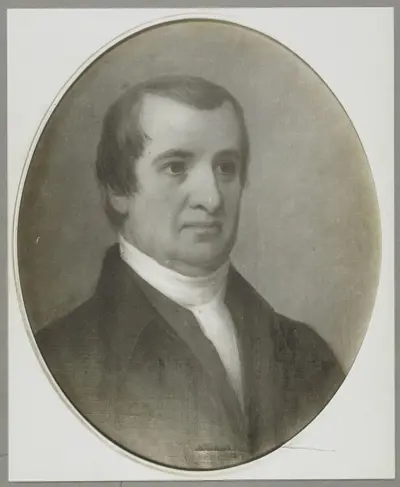
Abraham Clark was an American politician, slaveholder, and Revolutionary War figure. He was delegate for New Jersey to the Continental Congress where he signed the Declaration of Independence and later served in the United States House of Representatives in both the Second and Third United States Congress, from March 4, 1791, until his death in 1794.
