Carlos Fuentes Quotes
In the name of certainty, the greatest crimes have been committed against humanity.
Fuentes, Carlos. The Buried Mirror: Reflections on Spain and the New World. Houghton Mifflin, 1992.


Many cultures and nations, even after a century will not admit to the human rights violations that previous governments might have committed. Most dramatic is the Turkish government's not even allowing studies or discussions about the organized government mass murders of citizens of Armenian extraction—–the so called "Armenian Genocide ", but even in his native Poland there was and has been little admission of those Poles who collaborated with Hitler and the Nazis in the murder of millions of polish citizens and stole the residences, farms and other properties of Jews and other Poles who the Germans sent to concentration camps and even for the few who survived threatened them with death when they returned to reclaim their own property. Most modern societies have great difficulty coming to grips with police brutality and often denying that it is an endemic problem as opposed to one or two "bad apples".


He was one or the few Turkish Senior officials who would testify about the Armenian genocide. The Christian Armenians, a minority in Turkey and its lands, were discriminated against like other non Muslim minorities in the Ottoman Empire. But during the Turkish War with Russia and WWI, some Armenians defected and served on the Russian side. Many Turkish citizens took revenge on Armenians by means of murder and torture. Soon, the extermination of the Armenians became the official “Young Turk” government policy. Hundreds of thousands of Armenians were killed outright, and about an equal number were “deported” to special areas. Many died of malnutrition along the forced march of Ethnic Cleansing. Others were murdered as they were deported. No one knows exactly how many Armenians were killed with estimates ranging from ½ million to 4 million. This was the first genocide of the 20th century. Modern Turkish leaders however, are in denial about the Armenian deaths. They claim that there was a war and food was scarce; the only Armenians killed, the claimed were proven Russian agents. They further claim that the Armenian behavior was in large part responsible for the forced deportations because of their lack of patriotism and unwillingness to help the Turkish authorities identify the Russian agents. Most Turks today are unaware of the Armenian Genocide as nothing is taught about the massacres in schools or other institutions. It is against the law in Turkey to even have an intellectual study of the Turkish behavior towards the Armenians, much less publish anything about it.


This is the origin of the term “democide” which while not yet in common use has an importantly different meaning from genocide. The former Soviet Union killed millions for the purpose of gaining and maintaining power although they were not intending to wipe our a people or a culture—just opponents. Nazi Germany was guilty of both genocide and democide.

When TR came to office, the U. S. was in the midst of war with Philippine insurgents who were fighting an asymmetric , guerrilla war against the U. S. Army. The war had become very brutal with the insurgents using terror and atrocities and some Army units executing prisoners and torturing captives. Roosevelt, actually fired the General who was in charge of the field troops rather than just discipline lower level officers as usually has happened.

Two senior Chinese officials Yuan Ch`ang and Hsu Ching-ch`eng, realizing the implications and the vengeance the Western Powers would take on the Empress and China if the order were carried out, rewrote it to require that all foreigners be “protected.” This version went out to all governors except that of Shansi who had received a previous execution order {612690} . When the Empress discovered the change, Yuan Ch`ang and Hsu Ching-ch`eng were both summarily beheaded. However they saved thousands of Western lives and China from an even greater disaster.
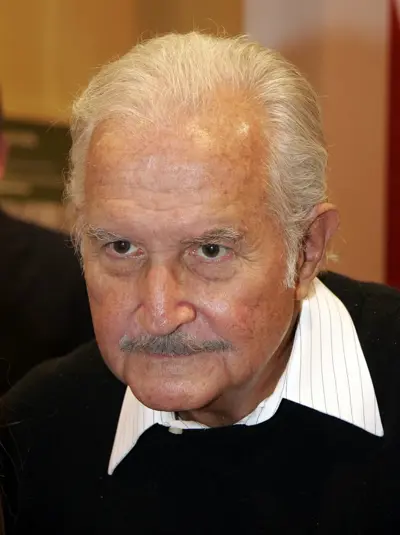
Carlos Fuentes Macías was a Mexican novelist and essayist. Among his works are The Death of Artemio Cruz (1962), Aura (1962), Terra Nostra (1975), The Old Gringo (1985) and Christopher Unborn (1987). In his obituary, The New York Times described Fuentes as "one of the most admired writers in the Spanish-speaking world" and an important influence on the Latin American Boom, the "explosion of Latin American literature in the 1960s and '70s", while The Guardian called him "Mexico's most celebrated novelist". His many literary honors include the Miguel de Cervantes Prize as well as Mexico's highest award, the Belisario Domínguez Medal of Honor (1999). He was often named as a likely candidate for the Nobel Prize in Literature, though he never won.
