Andrew Jackson Quotes
In England the judges should have independence to protect the people against the crown. Here the judges should not be independent of the people, but be appointed for not more than seven years. The people would always re-elect the good judges.
Parton, James. Life of Andrew Jackson. Vol. 3, Mason Brothers, 1860, p. 692.


This surprising quote of Roosevelt’s is noteworthy for two reasons. First most of us are amazed that one of our greatest presidents were opposed to the Checks and Balances of the Constitution as it has been interpreted since Chief Justice Marshall and his Court asserted the power of Judicial Review. Second, at the beginning of the 21st century the Republicans / Conservatives opposed the power of the Supreme Court and wanted it diminished, while the Democrats were strong supporters of judicial review. In TR’s era, the parties were flip flopped. It was William Jennings Brian and the Democrats who wanted to curtail the power of the court (they had then found even the income tax unconstitutional), while the Republicans / Conservatives fought to uphold the “traditional” role of the Supreme Court. Roosevelt, not only sided with the Democrats against his own party, but went further than Bryan or any other Democrat in calling for the voter’s right to review and nullify Supreme Court Decisions that were unpopular. Needless to say, most of TR’s Republican compatriots were not happy with him, but that was not uncommon as he took on the trusts and monopolies, set up national parks, established Federal Regulation of Food, and other positions that out reformed the Democrats.


The reference was to the Presidential power to appoint Supreme Court Justices who will serve beyond his term.


The view that the Supreme Court was the final arbiter of constitutional controversies was not held in early America.

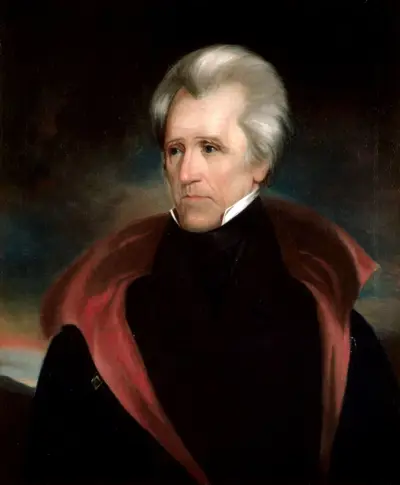
Andrew Jackson was an American lawyer, soldier, and statesman who served as the seventh president of the United States from 1829 to 1837. Before being elected to the presidency, Jackson gained fame as a general in the United States Army and served in both houses of the U.S. Congress. An expansionist president, Jackson sought to advance the rights of the "common man" against a "corrupt aristocracy" and to preserve the Union.
