Oliver Ellsworth Quotes
If we do not, it will end in bloodshed ... most probably.
Ellsworth was pleading for resolving the slavery issue then.
Oliver Ellsworth, 1745-1807, Member of the Continental Congress, U.S. Senator (Federalist, CT), Chief Justice of the U.S. Supreme Court, U.S. Minister to France, Debate, Constitutional Convention, Philadelphia, PA, 1787
Sourced by: Eigen's Political and Historical Quotations


As influential and revered as he was, Houston would not overcome the drive for secession by the wealthy, large, slave holders of Texas.

Sherman had friends in the South and he saw rebellion and war coming. Most Southerners had a romanticized view of war and were so wrapped up in trying to preserve their economic and cultural way of life that they did not think through the implications of such a war. After and during the war, he was particularly angry with the Southerners who had brought such terrible casualties and destruction upon the land and its people.

Prior to whites settling in America, various Indian tribes had a long history of fierce fighting for control of Kentucky. The Transylvania Land company negotiated for the “rights” to Kentucky. Dragging Canoe, who opposed the treaty, argued that the land had a bad history and would be very difficult to settle. Poet Theodore O’Hara described Kentuckians as “Sons of the Dark and Bloody Ground” in his poem, The Bivouac of the Dead.


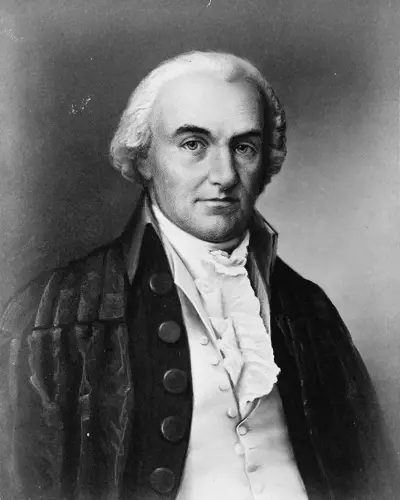
Oliver Ellsworth was an American lawyer, judge, politician, and diplomat. He was a framer of the United States Constitution, a United States Senator from Connecticut, and the third Chief Justice of the United States. Additionally, Ellsworth received 11 electoral votes in the 1796 presidential election.
