Joseph Stalin Quotes
If there's an air raid during the parade and there are dead and wounded, they must be quickly removed and the parade allowed to go on.
Moscow was under attack by the Germans in the largest military battle of history. Bombing raids of the city were quite common at that time. This quotation is often used to illustrate how cold and calculating a leader Stalin was.
Joseph Stalin, 1879-1953, Russian Premier, Orders Regarding a Military Parade for Red Square on the Anniversary of the Russian Revolution, November 7, 1941
Sourced by: Eigen's Political and Historical Quotations


In the 2004 Iraq war, some accused the United States and Britain of failing to perform this obligation. However, in those instances where they did, others claimed the right of resistance including bombing their own co-religionists and fellow citizens. Likewise, many of the same forces that castigated the allies for not ensuring public order and safety often also castigated Israel for enforcing public order and safety in the West Bank and Gaza.

The continuing violence and civil strife in Haiti frustrated most attempts to improve the public health system where the average life expectancy had degenerated to only 50 years.
China had a similar policy with each side wanting to establish more of a precedent for its ownership of the islands. Military flyovers, landing parties raising national flags by both countries triggered counter measures and the likelihood of casualties and even death to some soldiers. Both sides seemed willing to risk the lives of their troops as long as the conflict could be contained thereafter. But sometimes it cannot be.


Ironically, Lieberman was using this quotation to campaign against Bush’s son, George W. Bush.

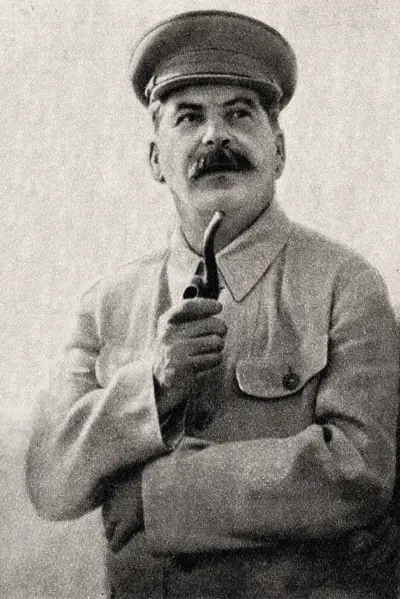
Joseph Vissarionovich Stalin was a Georgian revolutionary and the ruler of the Soviet Union from 1927 until 1953. He served as both General Secretary of the Communist Party of the Soviet Union (1922–1952) and Chairman of the Council of Ministers of the Soviet Union (1941–1953). Despite initially governing the country as part of a collective leadership, he ultimately consolidated power to become the Soviet Union's de facto dictator by the 1930s. A communist ideologically committed to the Leninist interpretation of Marxism, Stalin formalized these ideas as Marxism–Leninism while his own policies are known as Stalinism.
