Robert Morgenthau Quotes
I would rather have my fate in the hands of 23 representative citizens of the county [the grand jury] than in the hands of a politically appointed judge.
Robert Morganthau, District Attorney, New York City, Quoted in Time, April 8, 1985
Sourced by: Eigen's Political and Historical Quotations


From time to time, the assessment of a prospective Supreme Court justice has depended on an attempt to move the court in a particular direction or to prevent that. This is as opposed to the issue of the competence of the nominee. In most cases, such nominees may not have been the best qualified but they have been extremely competent. In a few cases, such as that of Justice Clarence Thomas, the justice was mediocre and inexperienced at best, but his virtues were his race and his total ideological consistency. Most attorneys can predict his vote in advance. He has never asked a question in oral arguments. See {623452} .


Note that in his very definition of a Petty Jury the right of the jury to ignore the judge's instructions in criminal matters wasa assumed--not some novel idea. Jury nullification has been a part of the American Criminal Justice System from the inception of the nation.


Judges are restrained by the law and precedence (stare decisis), as well as having to uphold what he/she thinks are undesirable laws or find against laws he thinks are good. He must decide on the law and the facts of the particular case. And if he is an appellate or a Supreme Court judge he must make compromises to accommodate other justices hearing the case along with him/her.

Over 30 states at the time required state judges to stand for election. The result was that they had to have money to finance their campaigns like any other politicians. The results were many cases of lack of impartiality and enormous public perception that the judges were beholden to large campaign contributors. Justice O’Connor pointed out to them that they had created their own problems by popularly electing judges.

This is a very important and fundamental quotation. Jefferson, John Adams, John Jay and many other Founding Fathers told us that the jury of peers was the final arbiter of a court case. However, many modern judges and legislatures have tried to erode that principle. In most states judges instructs juries that they are the final arbiter of the facts but he/she is the final arbiter of the law and how it should be applied in the case. But the founders wanted the jury to be the final arbiters of the law as well as the facts as is illustrated here and in {640587} and {640589}. For a more modern concurring view, see {640590}.


We shall have a system where When Roosevelt became Police Commissioner, virtually every appointment, promotion, and disciplinary action was controlled politically. Nothing could be more shocking to the police and the politicians than Roosevelt’s statement. But he implemented that policy and the result developed into the finest urban police department in the country. The political influence however returned a few decades later.

Johnson thought that he was 5 votes short to pass the Economic Opportunity Act to launch his War on Poverty. This quotation shows the master of Presidential vote getting in action. Jones came from a very conservative and racist district in Florida. In addition to the general conservative concern about the bill. White Southern racists were still angry about the Civil Rights Act that had just passed and saw the anti-poverty programs as another opportunity for the Federal Government to have racially integrated employment and training programs in the South. If Jones voted for the anti-poverty bill, he might well be defeated in the 1966 election. The President promised to appoint him as a Federal Judge—a lifetime appointment—if he were defeated. A potential problem was that there would not likely be a vacant judgeship open in Alabama. Johnson promised that he would create another judgeship for Jones if necessary—a judgeship that was not really needed. Jones was reelected and President Johnson did not have to create a new judgeship.
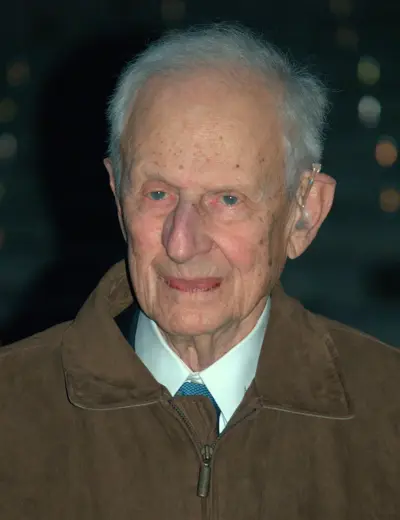
Robert Morris “Bob” Morgenthau was an American lawyer. From 1975 until his retirement in 2009, he was the District Attorney for New York County (the borough of Manhattan), having previously served as United States Attorney for the Southern District of New York throughout much of the 1960s on the appointment of John F. Kennedy. At retirement, Morgenthau was the longest-serving district attorney in the history of the State of New York.
