Sandra Day O'Connor Quotes
If the state has a problem with judicial impartiality, it is largely one the state brought upon itself by continuing the practice of popularly electing judges.
Over 30 states at the time required state judges to stand for election. The result was that they had to have money to finance their campaigns like any other politicians. The results were many cases of lack of impartiality and enormous public perception that the judges were beholden to large campaign contributors. Justice O’Connor pointed out to them that they had created their own problems by popularly electing judges.
Sandra Day O'Connor, U. S. Supreme Court Justice, Republican Party Of Minn. V. White, 2002
Sourced by: Eigen's Political and Historical Quotations


From time to time, the assessment of a prospective Supreme Court justice has depended on an attempt to move the court in a particular direction or to prevent that. This is as opposed to the issue of the competence of the nominee. In most cases, such nominees may not have been the best qualified but they have been extremely competent. In a few cases, such as that of Justice Clarence Thomas, the justice was mediocre and inexperienced at best, but his virtues were his race and his total ideological consistency. Most attorneys can predict his vote in advance. He has never asked a question in oral arguments. See {623452} .

Judges are restrained by the law and precedence (stare decisis), as well as having to uphold what he/she thinks are undesirable laws or find against laws he thinks are good. He must decide on the law and the facts of the particular case. And if he is an appellate or a Supreme Court judge he must make compromises to accommodate other justices hearing the case along with him/her.


The government of Pakistan regarded this as seditious. The Government can fire judges at will and the military has the right to convene its own courts and try Pakistani civilians for certain alleged crimes by removing their cases from the civilian courts. Even when a Pakistani judge is not intimidated by the government or the military, the Islamic extremist fanatics often assassinate any public official who any one of thousands of fanatics feels is anti-Islamic.

The concern of extreme wings of various parties with judicial activism is not limited to the United States.

The notion of lifetime appointment for federal judges had been debated before and during the constitutional convention. The founders wrote it into the constitution to give the judges more security so that they could not be pressured by politicians or wealthy individuals. Also, without this concept many countries have judges who are just rubber stamps for the legislature or the leader of the country.


In America, the best attorneys have stayed in private practice where they could make much more money than government service or become professors and scholars of law. In either case, most have a track record that would make Senate confirmation difficult even if they wanted to be Federal Judges. A few like Abraham Lincoln went into politics. The Supreme Court is somewhat of an exception because of the power it wields, but even then many great attorneys have not been so inclined. Federal judges have usually been above average as attorneys, but not among the greatest.

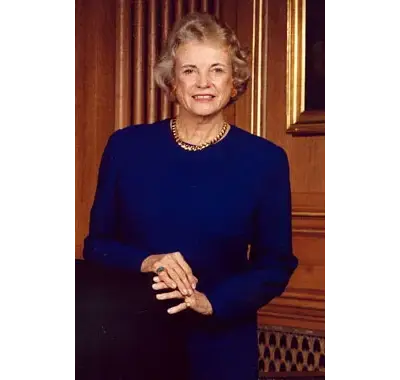
Sandra Day O'Connor is a retired attorney and politician who served as the first woman associate justice of the Supreme Court of the United States from 1981 to 2006. She was the first woman nominated and confirmed. Nominated by President Ronald Reagan, she was considered the swing vote for the Rehnquist Court and the beginning of the Roberts Court.
