John Stuart Mill Quotes
Of all officers of government, those in whose appointment any participation of popular suffrage is the most objectionable are judicial officers.
John Stuart Mill, 1806-1873, Member of Parliament, British Political Economist, Representative Government, 1861
Sourced by: Eigen's Political and Historical Quotations

Over 30 states at the time required state judges to stand for election. The result was that they had to have money to finance their campaigns like any other politicians. The results were many cases of lack of impartiality and enormous public perception that the judges were beholden to large campaign contributors. Justice O’Connor pointed out to them that they had created their own problems by popularly electing judges.


The concern of extreme wings of various parties with judicial activism is not limited to the United States.

From time to time, the assessment of a prospective Supreme Court justice has depended on an attempt to move the court in a particular direction or to prevent that. This is as opposed to the issue of the competence of the nominee. In most cases, such nominees may not have been the best qualified but they have been extremely competent. In a few cases, such as that of Justice Clarence Thomas, the justice was mediocre and inexperienced at best, but his virtues were his race and his total ideological consistency. Most attorneys can predict his vote in advance. He has never asked a question in oral arguments. See {623452} .


The issue of how the federal judiciary would be selected was one of the more hotly debated issues during the Constitutional Convention.


The judiciary in the American system must give deference to the executive and legislative branches and interfere only when there is a violation of the Constitution. Many of the laws may well be viewed as bad policy by the judge, or in some case, may be unjust. The judge however cannot interfere just because he is dealing with bad or unjust laws. So Judge Scalia points out that the judge functioning properly in the American system will find that he personally does not like the consequences of his own opinions.

In America, the best attorneys have stayed in private practice where they could make much more money than government service or become professors and scholars of law. In either case, most have a track record that would make Senate confirmation difficult even if they wanted to be Federal Judges. A few like Abraham Lincoln went into politics. The Supreme Court is somewhat of an exception because of the power it wields, but even then many great attorneys have not been so inclined. Federal judges have usually been above average as attorneys, but not among the greatest.


G. Harold Carswell was nominated to a vacancy on the Supreme Court by President Nixon. The nominee did not have a reputation as a distinguished jurist. Senator Hruska defended the nomination:


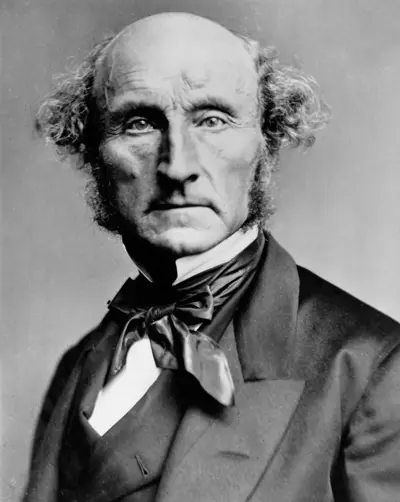
John Stuart Mill, usually cited as J. S. Mill, was an English philosopher, political economist, Member of Parliament, and civil servant. One of the most influential thinkers in the history of classical liberalism, he contributed widely to social theory, political theory, and political economy. Dubbed "the most influential English-speaking philosopher of the nineteenth century", he conceived of liberty as justifying the freedom of the individual in opposition to unlimited state and social control.
