George Carlin Quotes
I went to the Missing Persons Bureau but no one was there.
Carlin, George. Brain Droppings. Hyperion, 1997.


In earlier years it was common practice to use undercover agents to hand out disinformation pamphlets and false rumors to confuse and diffuse crowds gathering for demonstrations. The policy was abandoned. In 2006 a September 11 report surfaced {589485} where the practice had been recommended to be resurrected. The official spokesman denied that it had, but worded the denial in a way that led many to believe that the practice had been resumed. Note that he did not say that non-police officers did not do this for the police department. That left the door open for non police officer agents of the department to spread disinformation at the behest of the police department. It employed thousands of civilian, non officer personnel, and always had many paid informants and agents.


This is one of the major reasons that the relations between police and the communities they are policing is so important. Also, the style and courtesy that the IRS tax collectors exhibit is very important.

His plan was that at the end of WWII, the 4 nations would police the world to be sure that the “4 Policemen” would be sure that no other Hitler could ever even start to invade neighboring countries. Ironically, he strongly suspected that the Nationalist Chinese would not be able to do this for the Pacific and assumed that the US would have to carry that area as well, but he didn’t doubt the ability of the Russians to police Eastern Europe but didn’t suspect that it would be Russia herself who militarily and covertly would encroach on other Eastern European countries.


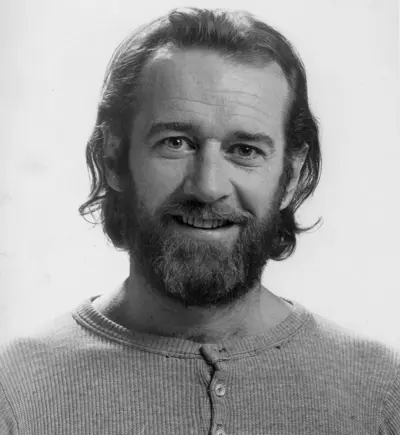
George Denis Patrick Carlin was an American stand-up comedian, actor, social critic, and author. Regarded as one of the most important and influential stand-up comics of all time, he was dubbed "the dean of counterculture comedians". He was known for his dark comedy and reflections on politics, the English language, psychology, religion, and taboo subjects. His "seven dirty words" routine was central to the 1978 United States Supreme Court case F.C.C. v. Pacifica Foundation, in which a 5–4 decision affirmed the government's power to censor indecent material on the public airwaves.
