Harry S. Truman Quotes
I was in search of a one-armed economist so that the guy could never make a statement and then say, "On the other hand ...
Harry S Truman, 1884-1972, 33rd President of the United States (Democrat, MO), Quoted in Time, January 30, 1989
Sourced by: Eigen's Political and Historical Quotations

In the midst of the Great Depression, Townsend had organized millions of Americans into “Townsend Clubs” to save money for their old age retirement. Townsend had proposed that the Government should run such a program where workers paid in every week and then all who were retired or disabled received $30 a week for like. Most economists of the time thought the Townsend old age pension plan unworkable: There was no national pension plan at the time. When Townsend together with two right wing religious extremists formed the Union Party, the one vulnerability that the Roosevelt Administration felt it had was the lack of an old-age pension plan. Within a few days, Roosevelt proposed a new plan of the New Deal to Congress. It was called Social Security. It passed in record time. See {616648} for Harry S Truman’s view of economists.


Milton Friedman is a man with dangerously simplistic visions and explanations of the economic world.
Both Rinfret and Friedman were conservative economists who profoundly disagreed with each other and said so.


Samuel Langhorne Clemens, 1835-1910
Samuel Langhorne Clemens, 1835-1910


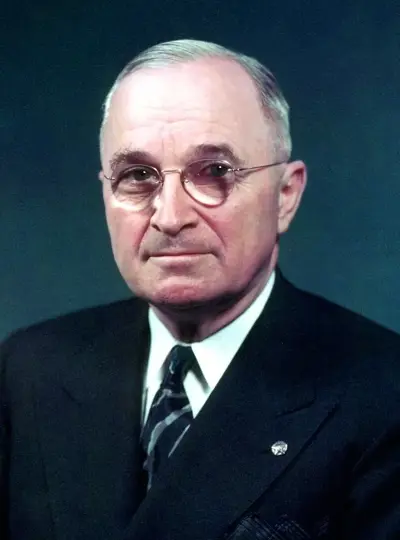
- Born: May 8, 1884
- Died: December 26, 1972
- Nationality: American
- Profession: President
Harry S. Truman was an American politician who served as the 33rd President of the United States (1945–53). He served as a United States Senator from Missouri (1935–45) and briefly as Vice President (1945) before he succeeded to the presidency on April 12, 1945 upon the death of Franklin D. Roosevelt. He was president during the final months of World War II, and approved the plan to drop atomic bombs on Hiroshima and Nagasaki. Truman was elected in his own right in 1948. He presided over an uncertain domestic scene as America sought its path after the war and tensions with the Soviet Union increased, marking the start of the Cold War.
