Hans Kung Quotes
I remember the Curia said, that's up to the American bishops, not up to Rome.
Küng, Hans. "Religion, World Ethos, and Global Politics." Interview by Harry Kreisler. Conversations with History, Institute of International Studies, UC Berkeley, 2005.


This concept is not terribly different from the concept of the theocracy of the Islamic government of Iran in the 21st century. There is a civil government but it serves and is “under the direction of the spiritual power.”


King Henry VIII had left the Roman Catholic church and taken England and Ireland out also. He replaced the Pope as the head of the English and Irish churches. There was much opposition in Ireland and the priests were the most assertive opponents to the change and were still loyal to the Pope. Queen Elizabeth continued to have problems with the Priests. James I, Elizabeth’s successor, became fed up by the Roman Catholic Priests and therefor issued this Proclamation.

This was a fairly radical constraint on what had been a traditional priestly prerogative throughout the ages. However, the penalty for such a sin and infraction was rather modest—a warning for the first offence, followed by reducing the cleric’s income. There were more serious punishments proscribed for repeated offenses, but typical of most reform efforts a newly prohibited activity carries a very light penalty. For example $20 fines for providing alcohol to a minor was the initial penalty in some states. A then current comparison can be made since elsewhere in this council dueling between Christians was also prohibited. But the penalty for even the first offence was excommunication.

The letter was written at the behest of the Archbishop of Canterbury. The quotation appears to ratify the Pope’s unlimited power, but in actuality carves out an exception whereby the Pope’s authority might be challenged in the future. Specifically, it claims the Pope has not the authority to alter that which “by the word of God, has eternal validity.” Politically, this position put the pope in a box. By arguing against the proposition, the Pope would have to maintain that he should have the right to alter the word of God that had eternal validity which no pope wanted to state. By not challenging the doctrine, there was an opening by which the pope’s omnipotence could be challenged in the future.


i.e., a clergyman representing a congregation The theory of this particular expulsion applied not to clergy in general, but to clergy who represented a Congregation. In the absence of strict separation of church and state, clergy representing congregations had representative and legal roles in other aspects of the government and therefore represented a problem of separation of powers within the government. The same logic, for example prohibited Sheriffs and Tax Officials from the House of Commons as well as Judges sitting in the Lords. With strict separation of church and state however, the separation of powers argument does not hold, and hence there is no such current prohibition. However, at the end of the 20th century, the Roman Catholic and some other religious institutions had reached the conclusion that clerics serving as elected representatives to various civil legislative bodies potentially had an inherent conflict of interest and divided loyalty and banned the practice from the religious end although the civil laws did not preclude it.


This notice of Excommunication was promulgated to the Catholic clergy in Ireland in May of 1538. It required all Roman Catholic leaders to size the property of Protestants or Catholics who sympathized with them. Those who did were then regarded as traitors by the Protestant King. The anti-Protestant feeling culminated with the massacre of about 100 Protestants who were drowned in Bann a few years later.

Lowery was one of the senior Black leaders in the civil rights movement of the late 1950s and early 1960s. In this interview, he was describing the atmosphere in Mobile, Alabama. Clergy of most faiths were active in the Civil Rights Movement in the South with the exception of the Roman Catholic Church which was very institutionally conservative. The Catholic leaders had a problem in that Catholics had been heavily discriminated against in early America and this prejudice was heaviest in the South in the 20th century. They feared that Catholic Activism against the status quo would create more problems for Catholics so they were not very helpful or supportive. This was NOT true for Catholics in general. Many individual Roman Catholics marched in the demonstrations, and some Catholic clergy from outside of the South came to the Southern protests and demonstrations. In the 20th century, the Catholic Church was divided between social activist reformers and in some cases revolutionists and the conservative wing of the Church who had supported the status quo.

This quotation shows the unique relationship that the Irish Republic has had with the Catholic Church. There was probably no other non Muslim country in the world where a political leaders could get elected avowing this kind of loyalty and control by a religious heirerchy. See {639726} for an even more Irish, drastic departure from the concept of separation of church and state.


The Holy Roman Emperor and the Pope were at odds. The Pope had issued an edict staking out the powers of the Pope. King Henry called a conclave of clerics and deposed Pope Leo VII. The Pope Excommunicated Henry and deposed him as king and emperor. Civil war ensued, and finally they reached a compromise and accommodation with each other." Saint Hildebrand
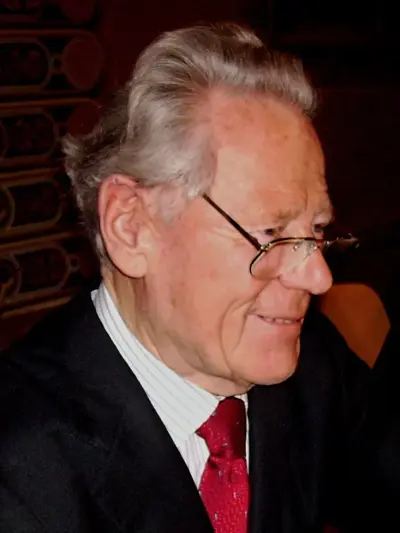
Hans Küng was a Swiss Catholic priest, theologian, and author. From 1995 he was president of the Foundation for a Global Ethic (Stiftung Weltethos).
