HOUSE OF COMMONS
i.e., a clergyman representing a congregation The theory of this particular expulsion applied not to clergy in general, but to clergy who represented a Congregation. In the absence of strict separation of church and state, clergy representing congregations had representative and legal roles in other aspects of the government and therefore represented a problem of separation of powers within the government. The same logic, for example prohibited Sheriffs and Tax Officials from the House of Commons as well as Judges sitting in the Lords. With strict separation of church and state however, the separation of powers argument does not hold, and hence there is no such current prohibition. However, at the end of the 20th century, the Roman Catholic and some other religious institutions had reached the conclusion that clerics serving as elected representatives to various civil legislative bodies potentially had an inherent conflict of interest and divided loyalty and banned the practice from the religious end although the civil laws did not preclude it.
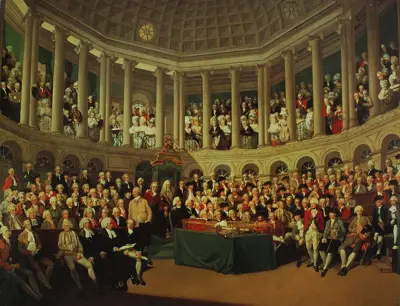
The House of Commons is the name for the elected lower house of the bicameral parliaments of the United Kingdom and Canada. In the UK and Canada, the Commons holds much more legislative power than the nominally upper house of parliament. The leader of the majority party in the House of Commons by convention becomes the prime minister. Other parliaments have also had a lower house called a "House of Commons".
