Marco Rubio Quotes
I'm theologically in line with the Roman Catholic Church. I believe in the authority of the church, but I also have tremendous respect for my brothers and sisters in other Christian faiths.
Rubio, Marco. Interview by Sarah Eekhoff Zylstra. "Marco Rubio: I'm Theologically in Line with Roman Catholicism." Christianity Today, 20 June 2012.


This concept is not terribly different from the concept of the theocracy of the Islamic government of Iran in the 21st century. There is a civil government but it serves and is “under the direction of the spiritual power.”


King Henry VIII had left the Roman Catholic church and taken England and Ireland out also. He replaced the Pope as the head of the English and Irish churches. There was much opposition in Ireland and the priests were the most assertive opponents to the change and were still loyal to the Pope. Queen Elizabeth continued to have problems with the Priests. James I, Elizabeth’s successor, became fed up by the Roman Catholic Priests and therefor issued this Proclamation.

This is an excellent example of the many public insults that the Irish religious leaders hurled at each other exacerbating the intercommunal tension between the Catholics and Protestants. There were amost no Irish leaders of either religion who tried to dampen the animosity and conflict.


The Christian Roman Empire was split in two—a Western (Latin) Empire led by the Roman Catholic Church in Rome, and the Eastern (Greek) Roman Empire led by the Orthodox Church headquartered in Constantinople (Byzantium). The two churches were not only in a theological conflict but violence broke out and the armies of the two religious empires attacked each other now and then. In 1439, leaders of the two versions of Christianity met in Florence, and they agreed to reunuion in which the Eastern Orthodox would again acknowledge the authority of the Pope. This was not a popular agreement with the majority of the Eastern Orthodox people and some of the clerical leadership. Constantine, realizing that he did not have pubic support at home for the end to the schism and the acceptance of the authority of the Pope, kept stalling on officially announcing and implementing the unity treaty. The Pope’s patience was wearing thin. Constantine did not adhere to ther treaty and the two churches have been apart ever since.

Much of the Catholic Church was greatly influenced by Aquinas long past his death. This quotation laid the foundation for the view, that anything the Church does, even if seemingly wrong or absurd, has some positive value. Here, Aquinas refused to totally condemn the Church practice of giving indulgences (official absolution for serious sins) to the rich in exchange for money. His view assumes that there must be some good in all acts of the church, even if we can not now determine it. This view makes reform very difficult even after the evil is recognized. Some theologians argue that although this perpetuates some bad practices, it provides stability and prevents leaders of the church from constantly trying to adapt the church to meet current popular or civil criticism.

Lowery was one of the senior Black leaders in the civil rights movement of the late 1950s and early 1960s. In this interview, he was describing the atmosphere in Mobile, Alabama. Clergy of most faiths were active in the Civil Rights Movement in the South with the exception of the Roman Catholic Church which was very institutionally conservative. The Catholic leaders had a problem in that Catholics had been heavily discriminated against in early America and this prejudice was heaviest in the South in the 20th century. They feared that Catholic Activism against the status quo would create more problems for Catholics so they were not very helpful or supportive. This was NOT true for Catholics in general. Many individual Roman Catholics marched in the demonstrations, and some Catholic clergy from outside of the South came to the Southern protests and demonstrations. In the 20th century, the Catholic Church was divided between social activist reformers and in some cases revolutionists and the conservative wing of the Church who had supported the status quo.


The Roman Catholic Church then maintained that salvation was dependent upon obedience to the Pope in all things civil and religious. See {595166} for the way that the Church at the time allowed some authority to civil authorities.
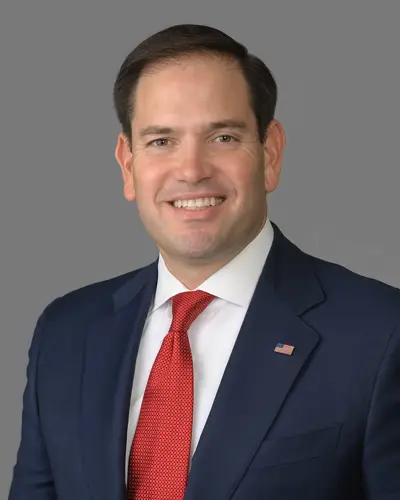
Marco Antonio Rubio is an American lawyer and politician serving as the senior United States senator from Florida. A Republican, he previously served as speaker of the Florida House of Representatives. Rubio unsuccessfully sought the Republican nomination for president of the United States in 2016, winning presidential primaries in Minnesota, the District of Columbia, and Puerto Rico.
