Kara Walker Quotes
I often compare my method of working to that of a well-meaning freed woman in a Northern state who is attempting to delineate the horrors of Southern slavery but with next to no resources, other than some paper and a pen knife and some people she'd like to kill
Walker, Kara. Kara Walker: My Complement, My Enemy, My Oppressor, My Love. Edited by Philippe Vergne, Walker Art Center, 2007, p. 11.


The issue of slavery which had been suppressed in Congress for the first decades of the nation broke out when Missouri statehood was considered. By previous agreement, slavery was not even discussed in Congress but the time period elapsed. Tallmadge not only proposed that no more slaves could come into Missouri {613176} but most shocking to the Southerners was that every person born in the new state would be free at the age of 25. In a generation, there would be no more slavery in Missouri and there would be no economic compensation for slave owners at all. The House of Representatives accepted the amendment, but it failed in the Senate. At that time, Senators were not elected by voters but were appointed by the state legislators and the Southern slave states had a disproportionate share of the senate from a population point of view. But what this quotation shows clearly that a majority of the country in 1819 were opposed to slavery and were willing to end it without compensation.

The “stake” refers to burning at the stake, one of the methods of murder used in the South to intimidate Negroes and whites who might hold anti-slavery sentiments.

The time was the mid 18th Century.

Fitzhugh was a Southern iconoclast whose view of Northern labor was much like that of Karl Marx but who was an enthusiastic supporter of slavery.
Parker and other escaped slaves in Christiana fought off slave catchers and killed the slave owner leading them. Charged with treason, he escaped to Canada with his family and lived there the rest of his life. While not a polished writer, after he himself had escaped and went to Christiana and leaned to read and write. He wrote this narrative of his life as a slave—one of the few written works we have from slaves.

Executed by the English for his part in the Easter Uprising. Most revolutionaries seeking independence become so focused on their revolution that they begin to believe that independence will solve all problems. Connelly was one of the more sophisticated ones who realized that many of the economic problems of Ireland had nothing to do with independence or the lack thereof.

Louis Napoleon Bonaparte. The “colonies” to which we was referring were the French Colonies in the Caribbean—particularly Haiti. The Black slaves had revolted against the slave-owners and had taken over all positions of authority and wore the uniforms and symbols of power including the epaulettes—the gold braid shoulder pieces that were symbols of high rank in military and diplomatic uniforms which were worn on all official occasions. Napoleon never did make good on his vow. He had many more problems with his own wars and governance in Europe. This quote does demonstrate the racism that existed in supposedly tolerant France.


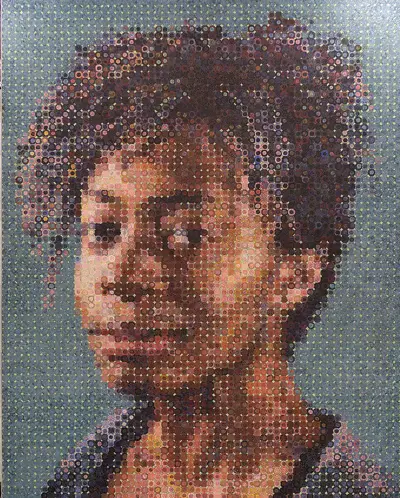
Kara Elizabeth Walker is an American contemporary painter, silhouettist, print-maker, installation artist, filmmaker, and professor who explores race, gender, sexuality, violence, and identity in her work. She is best known for her room-size tableaux of black cut-paper silhouettes. Walker has been the Tepper Chair in Visual Arts at the Mason Gross School of the Arts, Rutgers University since 2015.
