Harry S. Truman Quotes
I have little patience with people who take the Bill of Rights for granted. The Bill of Rights, contained in the first ten amendments to the Constitution, is every American's guarantee of freedom.


See George Mason for the contrary view. {606646}


Hamilton acknowledged that the major public objection to the new U. S. Constitution was its lack of a Bill of Rights, which Hamilton argued was unnecessary.

This is probably the first known use of the Bill of Rights phrase in the English language. For the earliest American use, see Edward Rutledge.


Note the use of the phrase “against the government.” One of the unique aspects of the American Constitution and The Bill of Rights is that the government is considered a potential and even probable infringer on the liberties of the people. It is almost as though the government was the potential enemy. Modern libertarians state this very explicitly and it is ever present in the views of both the right and left wings of American politics. Most centrists recoil at the thought that some citizens see the government as the enemy, but even in America there have been times where the government has infringed on the rights of citizens only to have the courts or future administrations and Congresses correct the error.

The early legal meaning of Civil Rights was very narrow. It referred to rights in normal non-governmental activities---shopping, education, social interaction, etc. However, it was the government who was depended on to enforce these rights. Later activities operated by state and local government were included like public education or the right to use a public bathroom, and for many even includes voting rights. Modern definitions consider civil rights to include all those rights to which an individual is entitled by virtue of his citizenship—including voting rights and others having to do with government—especially those of the 13th and 14th Amendments.


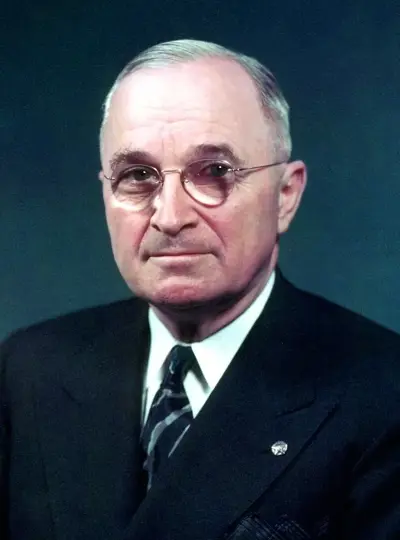
Harry S. Truman was an American politician who served as the 33rd President of the United States (1945–53). He served as a United States Senator from Missouri (1935–45) and briefly as Vice President (1945) before he succeeded to the presidency on April 12, 1945 upon the death of Franklin D. Roosevelt. He was president during the final months of World War II, and approved the plan to drop atomic bombs on Hiroshima and Nagasaki. Truman was elected in his own right in 1948. He presided over an uncertain domestic scene as America sought its path after the war and tensions with the Soviet Union increased, marking the start of the Cold War.
