James Meredith Quotes
When it comes to my rights as an American citizen, and yours, I am a triumphalist and an absolutist. Anything less is an insult.
Meredith, James, and William Doyle. A Mission from God: A Memoir and Challenge for America. Atria Books, 2012.

This is probably the first known use of the Bill of Rights phrase in the English language. For the earliest American use, see Edward Rutledge.


It is ironic that Pakistan, the creation of Jinnah’s efforts, has to a great extent adopted Sharia (Islamic Law) resulting in severe curtailment of freedom of speech and thought. Professors languish in jail for not teaching the history of Muhammed in the orthodox way, people are sentenced to death for what the local mullahs regard as blasphemy—results which from Jinnah’s point of view were terrible.

The call for individual liberty and the right of personal property by clergy is surprising to many. This Cahier was the consensus of the Clergy of Blois in 1789. There were cahiers of several provinces of France—some by the clergy, some by the nobles. What is fascinating is the emergence of many of the pre-Revolutionary French concepts. The example of the American revolution and its principles was known throughout the educated classes of France.


Two years after 9-11 the George W. Bush administration was pushing the envelope on due process, ethnic profiling and other civil rights issues. Clinton wanted to be helpful so he chastised those civil libertarians who were totally fixated on civil rights to the exclusion of almost all else.

Many New Yorkers and others felt that since the attack on the World Trade Center was made in the name of Islam, the mosque and commuity center should be built in another location further from Ground Zero. Ellison was debating someone who argued that the Mosque should not be built so that sensitivity can be shown for those New Yorkers who lost relatives and friends in the attack of September 11. Rather than insist on their Constitutional rights, the Muslim leadership of the project, moved the location somewhat further away from Ground Zero.


See {587703} for a similar statement by a Supreme Court Justice.


He had been a Congressman before assuming the Presidency. Civil rights was a major subject of debate after the Civil War. One major issue was that of citizenship itself. Many contended that Americans were citizens of a state and dependant on the state for the protection of civil rights. However, the extent to which the Federal government could and should be the guarantor of citizenship issues was in dispute. Today with the issue settled in favor of Federal preeminence, it is hard to realize that this was very unsettled at one point in history. Garfield was one of those leading the effort for more Federal involvement and control.


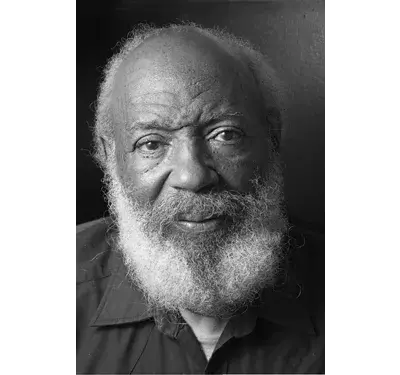
James Howard Meredith was the first African-American student admitted to the racially segregated University of Mississippi. He is also is an American civil rights movement figure, writer, political adviser, and Air Force veteran. It was in 1962 that Meredith became the first African-American student admitted to the theretofore segregated University of Mississippi, after the intervention of the federal government, an event that was a flashpoint in the civil rights movement. Inspired by President John F. Kennedy's inaugural address, Meredith decided to exercise his constitutional rights and apply to the University of Mississippi. His goal was to put pressure on the Kennedy administration to enforce civil rights for African Americans.
