William Shirley Quotes
I don't flatter myself with much dependence upon the present disposition of the Eastern Indians, who are many ways liable to be drawn into a rupture with us by the artifices of the French, their own weakness and the influence which the French Missionary Priests have over them.
Shirley, William. Correspondence of William Shirley, Governor of Massachusetts and Military Commander in America, 1731-1760. Edited by Charles Henry Lincoln, The Macmillan Company, 1912.


Not all whites were allowed to usurp all Indian lands. There were many attempts to limit white settlement to avoid friction with the Indians although the overall tendency was for the whites to take over and dominate the land.

Marquis de Seignelay. This shows that the concept of ethnic cleansing has been around for some time. The only thing that prevented the French from implementing the plan was that they couldn’t defeat the Iroquois. There is a certain irony here in that the Iroquois were very much allied with the British even during the American Revolution. After that war, the Iroquois were run out of their traditional lands, not by the French but by the Americans. And where did they go and resettle? Up to then British Canada, the very area where the French so feared them.


There had been no tradition of self government or even rights in Germany and some like Hamilton thought that the immigrants from such a totalitarian tradition would not handle the relative freedom of America. They were wrong.

He goes on to observe that the German’s are the most hated of the Europeans in large part because they mainly trade in rotgut liquor much of it poisoned which has a devastating effect on the Africans. (The English, in contrast had to have all alcohol inspected in London for safety, before it could leave for Africa.) The “kings” to which the Bishop referred are the rural tribal kings of whom there were more than a few. It is not as if there were a unified monarchy. Another interesting observation is that although Turner was one of Americas leading Blacks, he used the term frequently, but never capitalized it.


Clinton was a founder of the society. Many sophisticated Americans were in despair about the consequence of White contact with the Indian, and this was even before the worst of the treatment which came later, beginning under the presidency of Andrew Jackson and continuing well into the 20th century. Of particular interest is Clinton’s prescient observations regarding Africa and Africans interacting with whites with slavery the overriding white motive. Clinton was one of the many Americans who were abolitionists from the beginning of the nation.

“Cleaned out” meant destroyed. He had been a strong advocate of peace with whites. See {610679} .
He was writing about the natives of what is today Indonesia. At the time Indonesia was controlled by the Dutch. Heurmius was writing about the difficulty in converting Indonesians to Christianity.

President Thomas Jefferson and the Congress worked at making a workable set of relationships with the Indians. Here Congress gave Jefferson a fund so that he could invite influential Indian leaders to Washington and give them presents. The hope was that the Indian leaders would see the achievements of white society and then work to transform their people to this more desirable way of life. While this was a good strategy with a few Indian nations, the reaction of most Indian leaders was being very impressed but not really wanting to trade their existing lifestyle, customs and values for the undeniable advantages that American society could bring. Both the white and Indian leadership miscalculated, Jefferson believed that as soon as the Indian leaders could examine the two alternative societies, they would clearly choose to change. The Indians were so impressed with the sincerity, reasonableness, and friendliness that the white leadership exhibited, that the Indians did not realize that a large part of white society was different from the leadership and that the leaders spoke for and could control the other whites.

Sheridan was essentially right. With the Bison no longer available for hunting, the plains Indians had to depend on agriculture and settle on reservations or assimilate and integrate into white society. There was no specific policy to destroy the great buffalo herds, but the railroads allowed meat and the hides to be shipped East and sold for large profits for the companies who organized hunters and paid well for the buffalo. The overhunting and lack of any conservation principles soon led to the disappearance of the herds and almost made the Bison extinct. Today, we have built up some herds and they are being raised like cattle again providing meat and hides for man’s use. It is too bad that these techniques were not known then, as that could have been a terrific industry for the Indians although ranching was contrary to their then existing culture.

Standing Bear and some other Indians left the Indian territory where the government had assigned their tribe and with an invitation went to live on another Indian reservation designated for another tribe. The Government sent the military police to take the Indians back to the Indian Territory. The Indians claimed that they had the right to live wherever they wanted and did not have to live in the place the government had assigned them. The Indians won and since then, Indians like all other Americans were free to go wherever in the country that they wanted so long as they were not trespassing or violating other laws.


Samuel Langhorne Clemens, 1835-1910. Twain was one of the few whites who realized that success in assimilating American Indians would destroy their culture and identity. Even today, whites and Indians alike constantly debate the desirability of assimilation policies and supporting independent reservations.

This is a fascinating historical quotation. The English Foreign Minister and sent a draft of his proposed policy of English involvement to make Spain more democratic to counteract the influence of France which was then England’s arch enemy. The French had a military-oriented right wing government. The Queen, although only 27 years old at the time, had a brilliant grasp of foreign policy and the sagacity of an elder statesman. (And women in the United Kingdom could not even vote.) She realized that once England was involved in nation building and backing one party in Spain, England would be responsible for whatever that party ended up doing, and yet England really could not control the situation. Corruption, violations of civil rights, impoverishment all might occur, and England would have to defend those things lest the French who would then support the opposition would gain an upper hand in a proxy war. The situation was very similar to the United States getting involved in Vietnam and supporting the South Vietnam government which, despite U. S. efforts to the contrary, was totally corrupt, inept, religiously discriminatory, and totally inept in providing good government to the people. A similar situation occurred with the American intervention in Afghanistan where the President operated a totally corrupt and inept government and we were forced to support him. On other occasions she goes even further and actually writes new copy of policies personally. Note that the formality of the time required that the Queen refer to herself in the third person and not the first.

The eventual demise of the French Colonial Empire was predicted by almost all scholars and statesmen except the French. It would be after the Second World War when the French were proved to have been delusional on this point.

China had not strengthened is military as Empress Cixi had desired--{641697}. The result was a very weak country that other nations took advantage of and bullied their way to the most extraordinary concessions. This in turn, made the foreign diplomats lose respect for the Chinese officials with whom they dealt and many were treated with disrespect and abuse—like servants. This outraged influential, traditional, conservatives like Weng and began to develop the foundation of the anti-Western Boxer Movement in China.
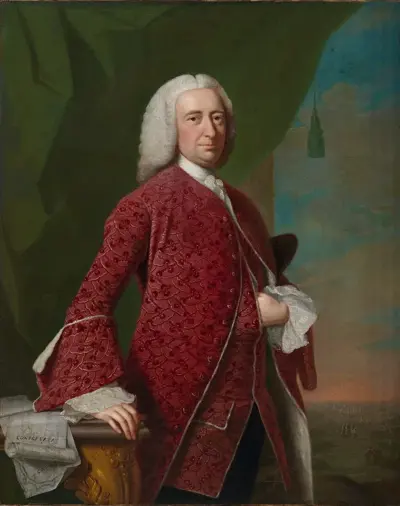
William Shirley was a British colonial administrator who was the longest-serving governor of the Province of Massachusetts Bay (1741–1749 and 1753–1756) and then Governor of the Bahamas (1760–1768). He is best known for his role in organizing the 1745 Siege of Louisbourg during King George's War, and for his role in military affairs during the French and Indian War. He spent most of his years in the colonial administration of North America working to defeat New France, but his lack of formal military training led to political difficulties and his eventual downfall.
